
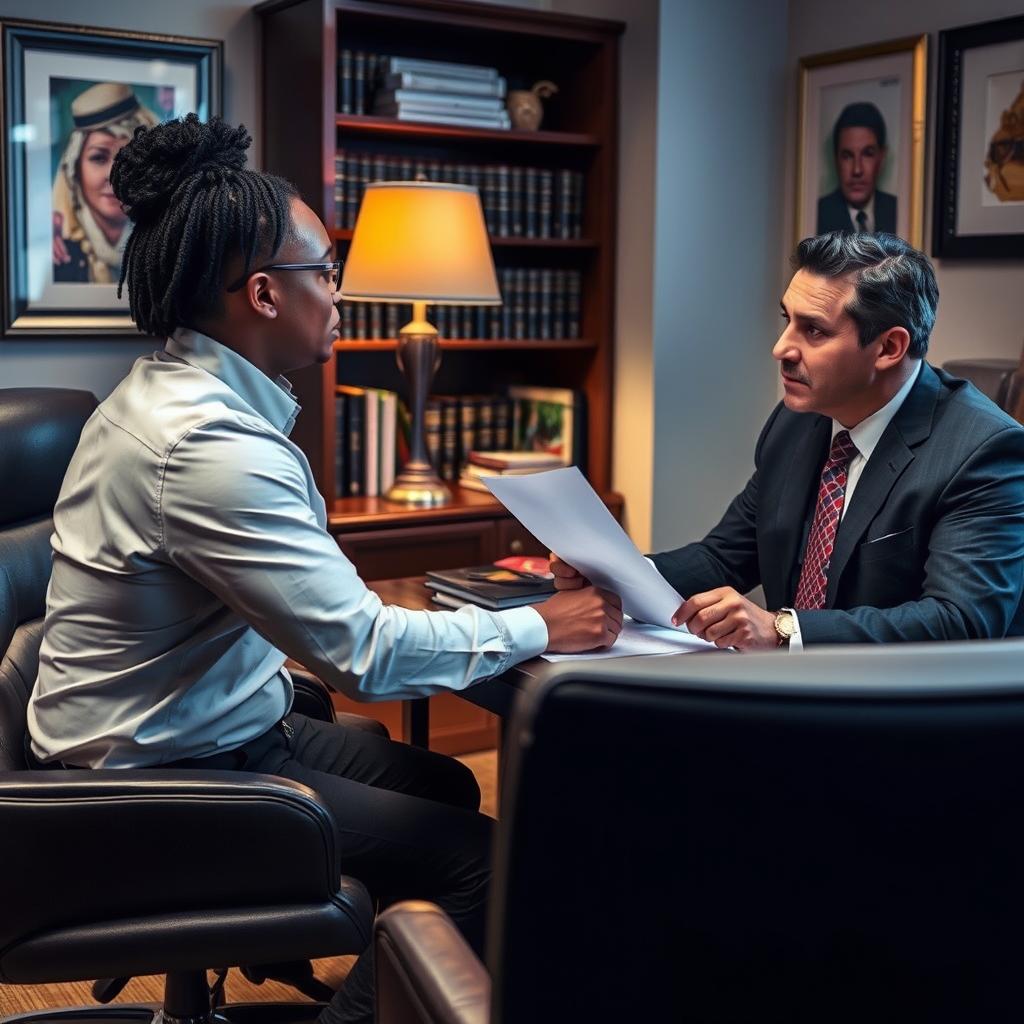
Graffiti Defense Lawyer Wesley Heights, DC
You’re standing outside a coffee shop on New Mexico Avenue when a police officer approaches. A neighbor reported someone tagging the wall on Woodley Road earlier that evening, and the description matches you. Within minutes, you’re looking at a citation for destruction of property — a criminal charge that could follow you far beyond Wesley Heights. If you’ve been accused of graffiti in this corner of Northwest Washington, D.C., you need an attorney who understands how the District prosecutes these offenses and who will move quickly to protect your record. Law Offices Of SRIS, P.C., with experienced criminal defense counsel admitted in D.C., represents individuals facing graffiti and property-damage charges in Wesley Heights and throughout the District. To request a consultation, call (888) 437-7747. Law Offices Of SRIS, P.C. – Advocacy Without Borders.
How We Approach Graffiti Defense Cases
Graffiti allegations in Washington, D.C., are taken seriously by the United States Attorney’s Office for the District of Columbia (USAO‑DC), the federal office that prosecutes local crimes. Unlike most cities, D.C. Has no elected district attorney; instead, experienced federal prosecutors handle everything from petty vandalism to felony property damage. That means a graffiti case in Wesley Heights is not just a local matter — it lands in the D.C. Superior Court on Indiana Avenue and is litigated by attorneys with federal resources.
Our defense strategy begins by examining how the evidence was gathered. Was the identification based on a single witness who saw someone from a distance? Were photographs taken, and do they clearly show the accused individual? Graffiti charges often hinge on circumstantial evidence, and an experienced defense attorney scrutinizes every link in the chain. We also look for procedural missteps: an unlawful stop, a suggestive identification procedure, or a search that exceeded what the law allows. Because D.C. Uses the Pretrial Services Agency rather than cash bail, we can often secure a release without financial hardship while we build the defense, giving you the space to participate in your case.
In many instances, we negotiate with the prosecutor before trial. A graffiti charge under D.C. Code Title 22 may be reduced, resolved through community service and restitution, or even dismissed if the evidence is weak. When a trial is the right call, our Of Counsel attorneys — including those with decades of trial experience in D.C. Superior Court — are prepared to challenge the government’s case. Every step, from the first court appearance at 500 Indiana Avenue NW to any potential appeal, is handled with an eye toward the least disruptive outcome for your life.
What to Expect When You Work With Our Firm
When you contact Law Offices Of SRIS, P.C., you will speak with someone who understands the Wesley Heights community and the unique nature of criminal prosecution in the District. Your first consultation allows us to hear your side of the story, explain the likely charges under D.C. Code Title 22, and outline possible defense avenues. We review every detail — where the alleged graffiti occurred, who reported it, what type of property was involved, and whether there have been similar reports in the area.
Once you retain us, we appear with you at every court date and handle communications with the USAO‑DC. Misdemeanor destruction-of-property cases generally move through the D.C. Superior Court Criminal Division; felony-level charges, which may apply if the damage value is substantial, are prosecuted more actively. Our attorneys will explain realistic timelines, keep you informed about any plea offers, and, if necessary, prepare for trial. Throughout the process, we emphasize keeping you out of custody and working toward a resolution that minimizes long-term consequences. D.C. Law permits record sealing for certain dispositions, and we discuss those options from day one so you understand what a favorable outcome looks like.
Penalties for Graffiti Offenses in Washington, D.C.
The penalties for a graffiti conviction in the District of Columbia depend on how the offense is charged. Under D.C. Code Title 22, destruction of property can be classified as a misdemeanor or a felony, largely based on the value of the damage and any prior record. A misdemeanor destruction charge may result in up to 180 days in jail and a fine; a felony count carries significantly more severe consequences, including longer incarceration and a permanent felony record. Additionally, the court commonly orders restitution to the property owner and community service.
Beyond the immediate sentence, a graffiti conviction can affect employment, housing applications, professional licenses, and immigration status. Because D.C. Has no traditional parole board, release conditions are supervised by the Court Services and Offender Supervision Agency, which can impose strict requirements. However, the District also offers deferred sentencing and diversion programs in appropriate cases. An experienced defense attorney can explore these alternatives, arguing for a resolution that keeps your record clean. Every case is different, and the outcome depends on the specific facts, the strength of the government’s evidence, and the skill of your legal representation.
About Mr. Sris and His Of Counsel Team
Law Offices Of SRIS, P.C., founded in 1997, serves clients across Virginia, Maryland, the District of Columbia, New Jersey, and New York. Mr. Sris, Owner and Founder of the firm, brings the perspective of a former prosecutor. He testified before the Virginia House Courts of Justice Committee in support of 2019 HB 635 (chief patron Del. David Bulova).
Mr. Sris and his Of Counsel bring extensive combined legal experience. Results may vary. The team includes attorneys admitted to practice in D.C. Superior Court who routinely handle criminal cases arising in Wesley Heights, Spring Valley, Georgetown, and throughout the District. They understand the local court procedures, the key personnel at the USAO‑DC, and the strategic considerations that can make the difference in a graffiti defense case. cases are assessed individually — the firm does not hand your file off to a junior clerk; the attorney you meet is the attorney who stands with you in court.
Frequently Asked Questions
Who prosecutes criminal cases in Washington, D.C.?
Criminal cases in Washington, D.C., are prosecuted by the United States Attorney’s Office for the District of Columbia (USAO‑DC) — a federal office — not a local district attorney. This makes D.C. Unique; local crimes under the D.C. Code are handled by federal prosecutors who answer to the U.S. Department of Justice. All felony and misdemeanor proceedings take place at the D.C. Superior Court, located at 500 Indiana Avenue NW. Because of this structure, having an attorney familiar with federal-level tactics and the Superior Court is essential.
Does D.C. Have cash bail?
No; Washington, D.C., eliminated cash bail and instead uses the Pretrial Services Agency (PSA) to assess each defendant’s risk and recommend release conditions. Most individuals accused of graffiti or other misdemeanor offenses are released without having to post money. The PSA conducts an interview and background check, then makes a recommendation to the court. Our attorneys know how to present a client’s ties to the Wesley Heights community, employment, and family situation to support a favorable release decision.
Can I get a graffiti conviction sealed from my D.C. Record?
Yes, D.C. Law allows record sealing for eligible offenses under D.C. Code § 16‑803, including aquittals, dismissals, and certain convictions after a waiting period. For graffiti charged as a misdemeanor destruction of property, sealing may be available after a designated number of years without new convictions. Even if you are found guilty, consulting an attorney early in the process can help you take steps that improve sealing eligibility later. We evaluate your case with an eye toward eventual record relief.
What should I do if I’ve been accused of graffiti in Wesley Heights?
If you are contacted by police or receive a citation for graffiti, do not discuss the matter with anyone except an attorney. Anything you say to law enforcement can be used against you. Politely decline to answer questions and state that you wish to speak with counsel. Then contact a criminal defense lawyer who handles D.C. Cases. Prompt legal involvement can prevent charges from being filed or help secure a resolution that avoids jail and a conviction.
How long does a graffiti case take in D.C. Superior Court?
The timeline varies depending on whether the case is charged as a misdemeanor or a felony, the court’s docket, and the complexity of the evidence. A straightforward misdemeanor may resolve within a few months; a felony with extensive photographic evidence, multiple witnesses, or a contested motion to suppress could extend much longer. Our attorneys keep you informed of realistic schedules and push for efficient resolution while protecting your rights.
Do I need a lawyer for a graffiti ticket, or can I handle it myself?
In the District of Columbia, even a seemingly minor graffiti charge is a criminal matter, and going to court without an attorney puts your record, future, and freedom at risk. The USAO‑DC will have a prosecutor presenting the case; you should not face that alone. An experienced defense lawyer can identify weaknesses in the state’s evidence, negotiate with the prosecutor, and present mitigating factors that a self-represented defendant may not know to raise. For guidance on your specific situation, reach Law Offices Of SRIS, P.C. at (888) 437-7747.
For statutory analysis and broader criminal defense resources, visit our main site: criminal defense practice in Washington, D.C.
Additional criminal defense pages for the District of Columbia:
- Washington, D.C. Criminal lawyer
- Georgetown criminal lawyer
- Spring Valley criminal lawyer
- Cleveland Park criminal lawyer
Primary Sources: D.C. Superior Court · D.C. Code Title 22
Attorney advertising. Prior results do not guarantee a similar outcome.
Case results depend on a variety of factors unique to each case.
Results may vary.