
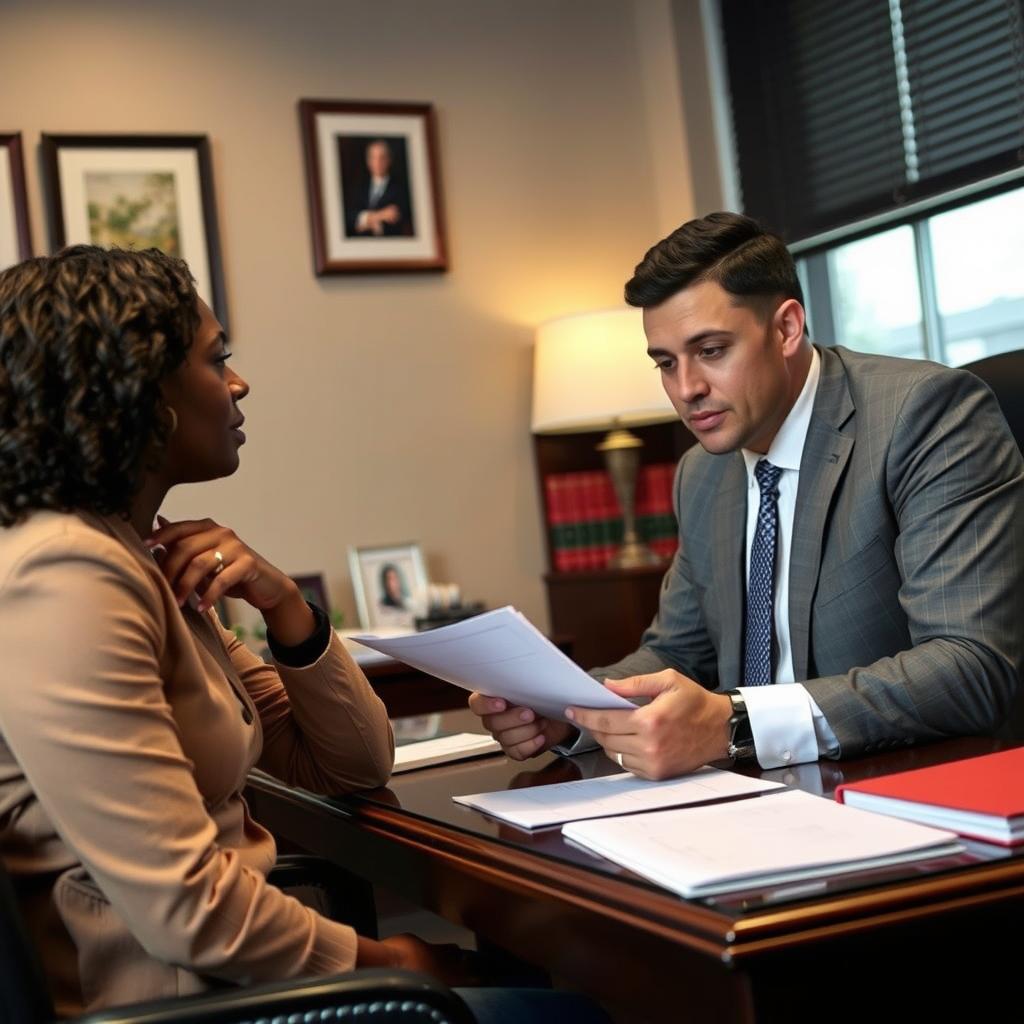
Controlled Substance Lawyer Southwest Waterfront, DC
If you are facing a controlled substance charge in the Southwest Waterfront neighborhood of Washington, D.C., the legal stakes are significant and the process unique. The District of Columbia is not a state; it is a federal territory where local criminal prosecutions are handled by the United States Attorney’s Office for the District of Columbia (USAO‑DC) rather than a local district attorney. This federal‑local hybrid jurisdiction demands defense counsel who understand both D.C. Superior Court procedure and the approach of federal prosecutors. At Law Offices Of SRIS, P.C., Mr. Sris and his Of Counsel team represent individuals throughout D.C., including the Southwest Waterfront area, with a focus on protecting their rights in controlled substance cases. Our Arlington location, just across the Potomac River, serves clients from Waterfront Station, Arena Stage, the Wharf, and nearby neighborhoods. For a confidential consultation, call (888) 437‑7747. Law Offices Of SRIS, P.C. – Advocacy Without Borders.
All local criminal cases, including controlled substance offenses, are heard at the DC Superior Court, located at 500 Indiana Avenue NW, Washington, DC 20001.
Source: DC Courts, Superior Court Criminal Division
Reviewed by Mr. Sris, admitted in VA/MD/DC/NJ/NY.
Understanding Controlled Substance Charges in Southwest Waterfront and Washington, D.C.
The Southwest Waterfront neighborhood—anchored by the Wharf, Waterfront Metro, and numerous government agencies—falls under the jurisdiction of the DC Superior Court. Controlled substance offenses in D.C., whether possession of cocaine, heroin, fentanyl, prescription drugs, or synthetic substances, are prosecuted actively. Because the USAO‑DC handles these cases, defendants face a prosecution team with extensive resources and a national perspective. The unique jurisdictional structure means that even a local arrest by the Metropolitan Police Department (MPD) leads to charges brought under D.C. Code Title 22 in a court that operates under federal authority. Pretrial release decisions are not based on cash bail; instead, the Pretrial Services Agency (PSA), a federal agency, conducts a risk assessment and makes a release recommendation to the judge.
For someone arrested on a controlled substance charge while living, working, or visiting Southwest Waterfront, the immediate concerns include understanding the charge, navigating the release process, and preparing a defense for the initial court appearance. Mr. Sris and his Of Counsel team are familiar with the MPD’s procedures in the area and the way the U.S. Attorney’s Office screens drug cases for charging. Whether the alleged offense involves simple possession, possession with intent to distribute, or distribution, the consequences of a conviction can include incarceration, probation, fines, and collateral effects on employment and housing. We work to protect clients’ interests from the outset.
How Mr. Sris and His Of Counsel Handle Controlled Substance Cases
Defending a controlled substance case in Washington, D.C. Requires a thorough review of the arrest circumstances, the chemical testing of the alleged substance, and the integrity of the chain of custody. Law enforcement officers must establish probable cause for any search or seizure; when they fail to do so, the evidence may be challenged through a motion to suppress. Mr. Sris, a former prosecutor, draws on his insight into prosecutorial decision‑making to identify weaknesses in the government’s case. His Of Counsel team, with backgrounds that include substantial D.C. Courtroom experience, contributes to the investigation of each case.
The firm’s approach also addresses the interplay between D.C. Law and federal consequences. A drug conviction in D.C. Superior Court can trigger federal sentencing enhancements in later cases or immigration consequences for non‑citizen defendants. We therefore consider the full scope of a client’s exposure, not just the immediate charge. Throughout the process, clients remain informed, and every strategic decision—whether to negotiate a reduced charge, seek deferred sentencing if available, or proceed to trial—is made collaboratively. We represent individuals at all stages, from the initial presentment through trial and post‑conviction relief, always with the goal of achieving the most favorable outcome possible under the circumstances.
About Mr. Sris and His Of Counsel Team
Mr. Sris, Owner and Founder of Law Offices Of SRIS, P.C., has practiced since 1997 and is admitted in Virginia, Maryland, the District of Columbia, New Jersey, and New York. His background as a former prosecutor gives him a practical understanding of how controlled substance investigations are built and prosecuted. Mr. Sris testified before the Virginia House Courts of Justice Committee in support of 2019 HB 635 (chief patron Del. David Bulova). He focuses the firm’s resources on delivering thorough, attentive representation in every matter.
Working alongside Mr. Sris, the firm’s Of Counsel attorneys contribute extensive experience in criminal defense litigation, including complex drug cases in D.C. Superior Court. Together, the team provides a defense grounded in knowledge of local court procedures, the D.C. Code, and federal sentencing law. Because our Arlington location is only minutes from Southwest Waterfront, we are readily available for court appearances and client meetings. Reach our firm at (888) 437‑7747 to discuss your situation.
Frequently Asked Questions
Who prosecutes controlled substance cases in Washington, D.C.?
Controlled substance cases in D.C. Are prosecuted by the United States Attorney’s Office for the District of Columbia (USAO‑DC), not a local district attorney. The District of Columbia is a federal territory where even local offenses under the D.C. Code are handled by federal prosecutors. All hearings occur at DC Superior Court, 500 Indiana Avenue NW. This structure means that a defense lawyer must be comfortable with federal‑style prosecution tactics and resources.
Does D.C. Use cash bail for drug charges?
No, the District of Columbia does not use cash bail. Instead, the Pretrial Services Agency (PSA), a federal agency, assesses each defendant’s risk and makes a release recommendation to the judge. Most individuals charged with non‑violent offenses, including simple drug possession, are released without posting money. For more serious distribution or trafficking charges, the PSA and the court may impose conditions such as drug testing, supervision, or home confinement.
Can a controlled substance conviction be sealed in D.C.?
Depending on the circumstances, some controlled substance convictions in D.C. May be sealed after a waiting period. D.C. Law allows record sealing for acquittals, dismissals, and certain qualifying convictions under D.C. Code § 16‑803. Additionally, offenses involving marijuana may have expanded eligibility because simple possession of marijuana is now legal for adults in D.C. An attorney can evaluate whether a particular conviction is sealable and when the waiting period expires.
How long does a controlled substance case take in D.C. Superior Court?
Misdemeanor drug cases typically reach trial within a few months, while felony distribution or trafficking cases often take six to twelve months or more. The exact timeline depends on the complexity of the evidence, the number of motions filed, and the court’s calendar. Cases may be delayed if the government seeks laboratory analysis of the alleged substance, or if competency evaluations are ordered. A lawyer can provide a more specific estimate based on the charge and the assigned judge’s docket.
What are the potential penalties for drug distribution in D.C.?
Penalties for distributing a controlled substance in D.C. Depend on the type and quantity of the drug, as well as the defendant’s prior record. Distribution of Schedule I or II narcotics is a felony carrying the possibility of years in prison and substantial fines. Even first‑time offenders can face incarceration. While simple possession of small amounts of certain drugs may be charged as a misdemeanor, any allegation of distribution or intent to distribute escalates the case to a serious felony matter.
Do I need a lawyer if I am charged with possession of a controlled substance?
Yes, you should contact a lawyer immediately if you are charged with possession of a controlled substance. Even a seemingly minor possession charge can result in a criminal record, driver’s license suspension, or immigration consequences for non‑citizens. An attorney can review the evidence, identify defenses such as an illegal search, and negotiate with the prosecutor for a reduction or alternative disposition where appropriate. Early representation often leads to better outcomes.
What should I do if I am arrested for a drug offense in Southwest Waterfront?
If you are arrested in Southwest Waterfront, remain silent, request an attorney, and do not discuss your case with police. Anything you say can be used against you. You will be taken to MPD custody and likely presented at DC Superior Court within 24 hours. Contact a lawyer as soon as possible so that representation can be arranged before your first court appearance. Early intervention can affect release conditions and the direction of the case.
Does the firm handle federal controlled substance cases in D.C.?
Yes, Mr. Sris and his Of Counsel handle both D.C. Superior Court and federal drug cases arising in the District. Federal charges, such as conspiracy to distribute across state lines, are prosecuted in the U.S. District Court for the District of Columbia. Those cases operate under the Federal Sentencing Guidelines and carry mandatory minimum penalties in many situations. The firm’s experience in both court systems provides a coordinated defense for clients facing overlapping state and federal exposure.
Is marijuana legal in D.C.?
Possession of up to two ounces of marijuana by adults over 21 is legal in D.C. Under current law. However, selling marijuana or possessing more than two ounces remains a criminal offense. Additionally, marijuana remains illegal on federal property, which is abundant in the District. An arrest for marijuana distribution or possession with intent to distribute is still prosecuted vigorously by the U.S. Attorney’s Office.
Can the search in my drug case be challenged?
Yes, if police conducted a search without a warrant or probable cause, the evidence may be suppressed through a motion filed in DC Superior Court. The Fourth Amendment applies throughout D.C. An attorney will scrutinize the basis for the stop, the scope of any search, and whether a warrant was properly obtained. Successful suppression of the drugs or other evidence can lead to a dismissal or a significant reduction in the charges.
Internal Link Navigation
- Washington, D.C. Criminal Defense Lawyer
- Criminal Lawyer Georgetown, DC
- Criminal Lawyer Spring Valley, DC
- Criminal Lawyer Cleveland Park, DC
- Criminal Lawyer Chevy Chase, DC
Primary Sources
- D.C. Code Title 22 – Criminal Offenses and Penalties
- DC Superior Court Criminal Division
- U.S. Attorney’s Office for the District of Columbia
Attorney advertising. Prior results do not guarantee a similar outcome.
Results may vary.
Case results depend on a variety of factors unique to each case.