
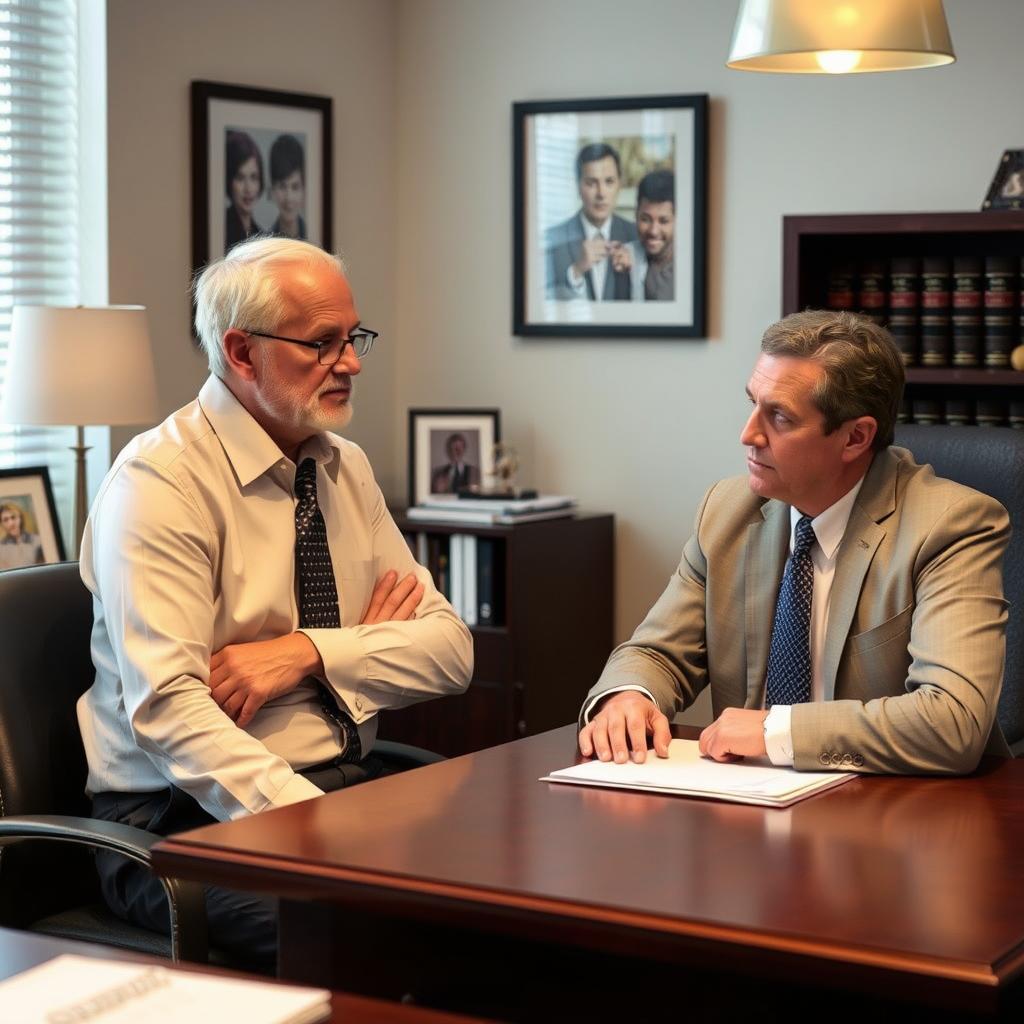
Abduction Lawyer Southwest Waterfront, DC
An abduction charge in the District of Columbia carries the potential for serious consequences, including felony-level penalties and a permanent criminal record. The Southwest Waterfront neighborhood, situated along the Washington Channel near the Wharf, falls within the jurisdiction of DC Superior Court at 500 Indiana Avenue NW, approximately two miles from the Southwest Waterfront area. DC operates under a unique jurisdictional structure: it is a federal territory where local crimes under the D.C. Code are prosecuted by the United States Attorney’s Office for the District of Columbia, not by a local district attorney. This means a person facing abduction charges in Southwest Waterfront encounters a federal prosecutorial apparatus, even though the charge arises under the local D.C. Criminal Code. The procedural landscape differs from that of neighboring Virginia and Maryland in significant ways, including the absence of traditional cash bail and the involvement of the Pretrial Services Agency in release decisions. For a consultation about an abduction matter in Southwest Waterfront, reach Law Offices Of SRIS, P.C. at (888) 437-7747. Law Offices Of SRIS, P.C. – Advocacy Without Borders.
What Abduction Means in Southwest Waterfront, DC
Abduction under District of Columbia law is a felony-level offense that involves the unlawful restraint or removal of another person. The D.C. Code, primarily under Title 22, addresses abduction alongside related offenses such as kidnapping and unlawful imprisonment. The charging decision rests with the United States Attorney’s Office for the District of Columbia, which evaluates the facts of each case and determines whether to bring charges under the applicable D.C. Code provisions. Because the U.S. Attorney’s Office prosecutes these cases, the procedural and evidentiary standards reflect federal prosecutorial practices applied to local criminal statutes.
Criminal cases arising in Southwest Waterfront are heard at the DC Superior Court Criminal Division at 500 Indiana Avenue NW. The courthouse sits at Judiciary Square, accessible via the Red Line Metro. For a resident of Southwest Waterfront, this means traveling from the Waterfront Metro station on the Green Line to Judiciary Square, a relatively short trip through downtown. The court’s calendar handles both misdemeanor and felony matters. A felony abduction charge typically proceeds through an initial presentment, followed by a preliminary hearing or grand jury indictment, and then trial scheduling determined by the court’s criminal division calendar. The Pretrial Services Agency, a federal entity, conducts a risk assessment and makes release recommendations to the court. DC does not use a traditional cash bail system for most offenses; instead, release conditions are based on the PSA’s evaluation of community ties, flight risk, and public safety considerations.
Metropolitan Police Department officers serving the Southwest Waterfront area fall under the First District station. An arrest made in the Southwest Waterfront vicinity—whether near the Wharf, along Maine Avenue SW, or in the residential corridors near Fort McNair—leads to processing through the MPD and presentation of charges at DC Superior Court. The proximity of Southwest Waterfront to federal facilities, including the Department of Homeland Security and the U.S. Coast Guard headquarters, means that certain incidents may draw overlapping federal interest, though the initial charging instrument typically proceeds through the local D.C. Code framework. Understanding the interplay between the local criminal code and potential federal implications is an important aspect of defense preparation in this unique jurisdiction.
How Mr. Sris and the Firm’s Of Counsel Attorneys Handle Abduction Cases
Defending an abduction charge in DC Superior Court requires familiarity with both the substantive D.C. Criminal Code and the procedural practices of the U.S. Attorney’s Office for the District of Columbia. Law Offices Of SRIS, P.C. approaches each case by examining the charging instrument, the factual allegations, the law enforcement reports, and any witness statements for constitutional challenges, evidentiary defenses, and procedural compliance issues. The firm’s Of Counsel attorneys review whether law enforcement followed proper protocols during the arrest and investigation, whether statements were obtained in compliance with applicable constitutional standards, and whether the government can meet its burden of proof on each element of the charged offense.
The defense process in DC Superior Court involves several phases. At the initial appearance, the court addresses release conditions based on the Pretrial Services Agency report. Counsel may present information regarding community ties, employment, family circumstances, and the specific facts of the case to inform the court’s release determination. During the discovery phase, the defense obtains and reviews the government’s evidence, including police reports, witness statements, forensic analysis, and any video or photographic evidence. Motion practice may address evidentiary issues, search and seizure questions, or identification procedures that affect the admissibility of evidence. Throughout this process, the firm’s Of Counsel attorneys communicate with the client about developments, potential resolutions, and trial preparation. Each case follows a timeline determined by the court’s calendar and the complexity of the matter.
Because abduction charges often involve nuanced factual scenarios—such as disputes over consent, custodial rights, or the nature and duration of any alleged restraint—the defense may require thorough factual investigation beyond the government’s evidence. The firm’s Of Counsel attorneys work to identify and preserve exculpatory evidence, locate and interview witnesses, and develop alternative factual narratives supported by the record. When resolution short of trial serves the client’s interests, counsel may engage with the U.S. Attorney’s Office to explore whether a disposition other than a contested trial is appropriate under the circumstances of the case.
About Mr. Sris and the Firm’s Of Counsel Attorneys
Mr. Sris, Owner and Founder of Law Offices Of SRIS, P.C., established the firm in 1997. A former prosecutor, Mr. Sris brings firsthand understanding of how charging decisions are made and how the government constructs a criminal case. He is admitted to practice in Virginia, Maryland, the District of Columbia, New Jersey, and New York. Mr. Sris testified before the Virginia House Courts of Justice Committee in support of 2019 HB 635 (chief patron Del. David Bulova). The firm’s practice in the District of Columbia draws on familiarity with the procedures of DC Superior Court and the practices of the U.S. Attorney’s Office for the District of Columbia, which prosecutes local crimes under the D.C. Code.
The firm’s Of Counsel attorneys concentrate their work in criminal defense, including felony matters such as abduction and related offenses. Together, Mr. Sris and the firm’s Of Counsel attorneys bring experience across multiple practice areas and jurisdictions, representing clients charged with offenses ranging from misdemeanors to serious felonies. The firm serves clients throughout the District of Columbia, including the Southwest Waterfront neighborhood, from its Arlington Location at 1655 Fort Myer Dr, Suite 700, Room 719, Arlington, VA 22209. Consultations are available by appointment. Reach Law Offices Of SRIS, P.C. at (888) 437-7747 to schedule a consultation.
Frequently Asked Questions
What is abduction under District of Columbia law?
Abduction under D.C. Law is a felony offense involving the unlawful restraint, detention, or removal of another person without legal justification. The D.C. Code, primarily under Title 22, addresses abduction and related offenses such as kidnapping and unlawful imprisonment. The specific charge and penalty classification depend on factors including whether force or intimidation was used, whether a weapon was involved, the age of the alleged victim, and the duration of any alleged restraint. Because the U.S. Attorney’s Office for the District of Columbia prosecutes these cases, the charging decision and plea negotiation process follow federal prosecutorial practices applied to local D.C. Code violations. For guidance on the specific charge you face, reach Law Offices Of SRIS, P.C. at (888) 437-7747.
Who prosecutes criminal cases in Washington, D.C.?
Criminal cases in DC are prosecuted by the United States Attorney’s Office for the District of Columbia, a federal prosecutorial office, rather than a locally elected district attorney. This reflects DC’s status as a federal territory: crimes defined under the D.C. Code are prosecuted by federal prosecutors in DC Superior Court. The U.S. Attorney’s Office for DC operates out of the federal courthouse complex near Judiciary Square. The Metropolitan Police Department handles arrests and initial investigations, while the Pretrial Services Agency—a federal agency—conducts risk assessments and makes release recommendations instead of the cash bail system used in many other jurisdictions. All cases are heard at DC Superior Court at 500 Indiana Avenue NW. To discuss the details of your matter, contact Law Offices Of SRIS, P.C. at (888) 437-7747.
Does DC have cash bail for abduction charges?
No, the District of Columbia does not use traditional cash bail for criminal charges, including abduction. Instead, the Pretrial Services Agency, a federal agency, conducts a risk assessment and recommends release conditions to the court. The PSA evaluates factors including community ties, employment status, family circumstances, prior criminal history, and the nature of the current charge. The court may impose conditions such as supervised release, stay-away orders, curfews, or electronic monitoring rather than setting a monetary bond. This system means that release decisions turn on individualized risk assessment rather than the ability to post money. For a consultation about your case, reach Mr. Sris and the firm’s Of Counsel attorneys at (888) 437-7747.
What should I do if I am charged with abduction in DC?
If you are charged with abduction in the District of Columbia, you should seek legal advice promptly and avoid discussing the facts of the case with anyone other than your attorney. An abduction charge in DC Superior Court is a serious felony matter prosecuted by the U.S. Attorney’s Office. Exercise your right to remain silent during any law enforcement questioning. Do not discuss the allegations on social media, in text messages, or with acquaintances, as those communications may become evidence. Preserve any documents, photographs, messages, or other materials that may be relevant to the events in question. Prompt legal involvement allows for earlier assessment of the case, including release conditions, evidence preservation, and potential defense strategies. For guidance on your specific situation, reach Law Offices Of SRIS, P.C. at (888) 437-7747.
How does a DC lawyer defend against an abduction charge?
A defense against an abduction charge in DC Superior Court may challenge the government’s evidence, examine the legality of law enforcement actions, contest the elements of the offense, or present factual defenses such as consent or lack of intent. The defense begins with a review of the charging document and the government’s evidence, including police reports, witness statements, and any forensic or video evidence. Counsel may file motions addressing search and seizure issues, identification procedures, or the admissibility of statements. Factual defenses may include demonstrating that the alleged victim consented to the interaction, that the defendant lacked the requisite intent to restrain or remove the person, or that the defendant had lawful custodial authority. The procedural posture of each case determines which strategies are most applicable. For a consultation, reach Mr. Sris and the firm’s Of Counsel attorneys at (888) 437-7747.
Can I get a DC criminal record sealed after an abduction charge?
Record sealing may be available for certain dispositions of a DC criminal case, including acquittals, dismissals, and some qualifying convictions, under D.C. Code § 16-803. The eligibility for sealing depends on the specific outcome of the case and the nature of the charge. For an acquittal, a dismissal with prejudice, or a nolle prosequi entered by the U.S. Attorney’s Office, sealing may be available without a waiting period in many circumstances. For convictions, eligibility depends on the offense classification and the passage of specified waiting periods. Not all offenses are eligible for sealing, and the petition process requires filing in DC Superior Court with proper notice to the government. For guidance on your specific situation, reach Law Offices Of SRIS, P.C. at (888) 437-7747.
For additional information about criminal defense matters in the District of Columbia, see our pages on criminal defense in Washington, D.C. and related resources for the Georgetown and Capitol Hill neighborhoods. Our firm also handles federal criminal matters in the U.S. District Court for the District of Columbia.
Primary sources: DC Superior Court — D.C. Code Title 22 (Criminal Offenses) — U.S. Attorney’s Office for the District of Columbia
Attorney advertising. Prior results do not guarantee a similar outcome.
Results may vary.
Case results depend on a variety of factors unique to each case.
Attorney responsible for this advertising: Mr. Sris.
© 1997-2026 Law Offices Of SRIS, P.C. All rights reserved.
Served from Arlington Location — 1655 Fort Myer Dr, Suite 700, Room 719, Arlington, VA 22209 | (888) 437-7747