
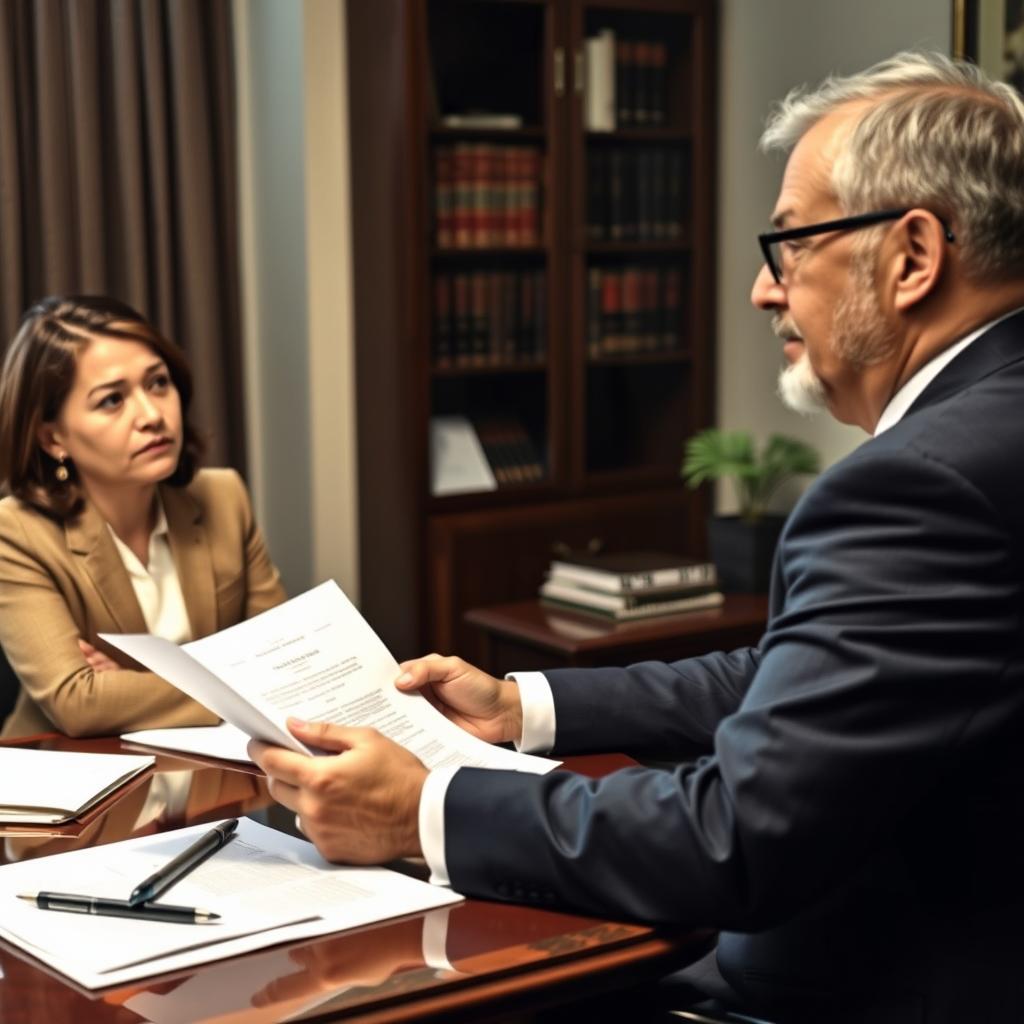
Federal Appeals Lawyer Maryland, MD
When a federal trial ends with an unfavorable outcome, the path forward is not closed. A federal appeal is a request for a higher court to review the legal decisions made in the district court. In Maryland, criminal convictions and certain pretrial rulings in the U.S. District Court for the District of Maryland—which sits in Baltimore and Greenbelt—can be challenged by filing a notice of appeal to the U.S. Court of Appeals for the Fourth Circuit in Richmond, Virginia. Mr. Sris and his Of Counsel handle federal criminal appeals for clients across Maryland, drawing on extensive experience in federal court procedure and appellate brief‑writing. The appeals process involves strict deadlines, complex procedural rules, and persuasive legal argument; missteps can waive important issues. To request a consultation about a federal appeal, call Law Offices Of SRIS, P.C. at (888) 437‑7747. Law Offices Of SRIS, P.C. – Advocacy Without Borders.
What Federal Appeals Mean in Maryland
The U.S. Court of Appeals for the Fourth Circuit is the intermediate appellate court that hears appeals from federal district courts in Maryland, Virginia, West Virginia, North Carolina, and South Carolina. For a criminal case tried in the District of Maryland—whether in the Baltimore division or the Greenbelt division—the Fourth Circuit is the court with jurisdiction to review the conviction, sentence, or certain pretrial orders. A federal appeal is not a second trial; the appellate court does not hear new evidence or re‑evaluate witness credibility. Instead, the panel of judges examines the trial record for legal errors, such as mistaken jury instructions, improper admission of evidence, or sentencing miscalculations under the U.S. Sentencing Guidelines. The appeal may also challenge constitutional issues, including Fourth Amendment search and seizure violations or ineffective assistance of counsel. Mr. Sris and his Of Counsel understand the appellate standards of review—whether de novo, abuse of discretion, or plain error—and how those standards affect the likelihood of reversal. Because the appellate record is limited to what was preserved at the trial level, identifying and properly raising issues during the district court proceedings is critical. The firm’s lawyers work with the trial record to pinpoint the strongest appellate issues and present them clearly in the opening brief and reply brief.
Oral argument in the Fourth Circuit is held primarily at the Lewis F. Powell Jr. United States Courthouse in Richmond, though the court occasionally sits in other locations. While many appeals are decided on the briefs without argument, the opportunity to appear before the panel and answer judges’ questions can significantly influence the outcome. Mr. Sris and his Of Counsel prepare thoroughly for oral argument, anticipating the judges’ lines of inquiry and framing the key issues succinctly. The firm serves clients across the state, from Baltimore City and Montgomery County to the Eastern Shore and Western Maryland, and lawyers from the firm’s Maryland location appear in the Fourth Circuit when argument is granted. Whether seeking to reverse a conviction, reduce a sentence, or challenge a pretrial detention order, the attorneys focus on preserving each client’s rights through the appellate process. Every federal appeal is governed by the Federal Rules of Appellate Procedure, local circuit rules, and standing orders that impose tight deadlines; missing a deadline can result in dismissal. Contacting appellate counsel as soon as possible after a conviction or adverse ruling helps protect the right to appeal.
How Mr. Sris and His Of Counsel Handle Federal Appeals
When a client retains the firm for a federal appeal, the work begins with an immediate review of the district court record. The attorneys examine the trial transcript, the docket, all filed motions, and any preserved objections to identify potential appellate issues. Because the notice of appeal must be filed within a short period after entry of judgment, prompt action is essential. Mr. Sris and his Of Counsel prepare and file the notice of appeal and any required docketing statement with the district court. The firm also handles applications for bail pending appeal or motions for release from custody under appropriate circumstances. Once the appellate record is compiled in the Fourth Circuit, the lawyers draft the appellant’s opening brief—a document that must concisely state the issues, present a procedural history, and argue each point of error with citations to the record and controlling authority. The brief’s quality, organization, and persuasiveness often determine the outcome. The firm’s approach emphasizes rigorous legal research and clear writing, avoiding unnecessary volume while making every argument count.
After the initial brief is served, the government may file a response. Mr. Sris and his Of Counsel then prepare a reply brief addressing any counterarguments. If the Fourth Circuit grants oral argument, the attorneys representing the client participate in intensive moot‑court sessions to simulate the judges’ questioning and refine the presentation. Even when argument is denied, the case may still succeed on the written submissions. Throughout the process, clients are kept informed of the appeal’s status and the realistic prospects for success. The firm’s lawyers are experienced in seeking en banc review by the full Fourth Circuit when a panel decision conflicts with precedent or presents an issue of dedicated importance, and, when appropriate, they preserve issues for possible certiorari to the U.S. Supreme Court. Every step of a federal appeal involves strategic choices about which issues to raise, how to frame them, and what relief to request. Mr. Sris and his Of Counsel team draw on extensive combined legal experience between Mr. Sris and his Of Counsel to handle federal appeals with careful preparation and attention to the appellate rules.
About Mr. Sris and His Of Counsel Team
Mr. Sris, Owner and Founder of Law Offices Of SRIS, P.C., provides strategic oversight for federal criminal appeals. He is admitted in Virginia, Maryland, the District of Columbia, New Jersey, and New York, and has practiced in the federal courts of all five jurisdictions since founding the firm in 1997. Mr. Sris testified before the Virginia House Courts of Justice Committee in support of 2019 HB 635 (chief patron Del. David Bulova). His approach to appellate work is grounded in a thorough understanding of the Federal Rules of Appellate Procedure and the Fourth Circuit’s local rules. The Of Counsel attorneys who collaborate on federal appeals have substantial litigation experience in the U.S. District Court for the District of Maryland and in federal appellate courts. Together, Mr. Sris and his Of Counsel have documented case results across multiple practice areas since 1997. Results may vary.
Frequently Asked Questions
What is a federal appeal?
A federal appeal is a legal process by which a higher court reviews the decision of a lower federal court to determine whether legal errors occurred that affected the outcome. In a criminal case, the appeal challenges rulings made by the U.S. District Court—such as the trial judge’s evidentiary decisions, jury instructions, or sentencing calculation. The appellate court does not retry the facts; it reviews the record for mistakes of law. The party appealing (the appellant) must file a notice of appeal and then submit written briefs arguing why the district court’s decision should be reversed, modified, or vacated. The government files a response brief, and the appellant may file a reply. The Fourth Circuit may hold oral argument or decide the case on the briefs. An appeal can result in an affirmance, reversal, remand for further proceedings, or modification of the sentence. To discuss whether filing an appeal is appropriate in your case, reach Law Offices Of SRIS, P.C. at (888) 437‑7747.
How does the federal appeals process work in Maryland?
A case from the U.S. District Court for the District of Maryland moves to the U.S. Court of Appeals for the Fourth Circuit through a structured sequence of filings and deadlines. The process begins with a notice of appeal that must be filed in the district court within a short window after the judgment or order being challenged. The district court clerk then transmits the record to the Fourth Circuit. The appellant prepares an opening brief, followed by the government’s response brief and the appellant’s reply brief. The Fourth Circuit may schedule oral argument at the courthouse in Richmond, Virginia, or occasionally at other locations. The panel of judges may also issue a per curiam opinion without argument. After the decision, the losing party may petition for rehearing en banc or file a petition for a writ of certiorari with the U.S. Supreme Court. The procedural steps are governed by the Federal Rules of Appellate Procedure and the Fourth Circuit’s local rules. Because missing a deadline can forfeit appellate rights, prompt consultation with appellate counsel is important. For guidance on your specific situation, reach Law Offices Of SRIS, P.C. at (888) 437‑7747.
Do I need a lawyer for a federal appeal?
While you are not legally required to have an attorney, handling a federal appeal without experienced appellate counsel is extremely difficult and can jeopardize your case. The rules of appellate procedure are complex, and the issues must be presented in a specific format with citations to the record and appropriate legal authority. An ineffective presentation may result in the court declining to consider the appeal or affirming the lower court’s decision. A lawyer who concentrates in federal criminal appeals can identify the strong $1s, ensure all procedural requirements are met, and craft persuasive briefs. Appointed counsel may be available for defendants who cannot afford to retain an attorney, but the timeline for requesting appointment is strict. Mr. Sris and his Of Counsel represent clients who seek to challenge federal convictions or sentences. To discuss your options, contact Law Offices Of SRIS, P.C. at (888) 437‑7747.
What are the common grounds for a federal criminal appeal?
Common grounds for a federal criminal appeal include errors in the application of the law, improper admission or exclusion of evidence, incorrect jury instructions, prosecutorial misconduct, ineffective assistance of counsel, and sentencing errors under the U.S. Sentencing Guidelines. A conviction may be challenged if the evidence was insufficient to support the jury’s verdict, or if a constitutional violation occurred—such as an unlawful search or seizure, a violation of the right to a speedy trial, or a coerced confession. Procedural mistakes, like the denial of a motion to suppress evidence or the improper denial of a motion for a new trial, can also form the basis of an appeal. Each ground requires careful analysis of the trial record and preservation of the issue at the district court level. An appellate lawyer reviews the entire case to determine which issues are viable and, if successful, what relief the appellate court can grant. For a consultation, reach Mr. Sris and his Of Counsel at (888) 437‑7747.
How long does a federal appeal take?
The timeline for a federal appeal varies by the court’s docket, the complexity of the case, and whether oral argument is scheduled. After the notice of appeal is filed, the district court prepares the record, the parties submit briefs, and the appellate panel reviews the case. A straightforward appeal may be resolved more quickly, while a complex matter with an extensive record can take longer. The Fourth Circuit publishes a schedule of its sessions, and counsel are notified when a case is assigned to a panel. There is no set number of days or months; the court decides each case on its own procedural timetable. Because the appellate timeline is not within the parties’ control, an appropriate approach is to ensure that all documents are filed timely and that the arguments are as clear and well‑supported as possible. If you are considering an appeal, the earlier you engage counsel, the more time they will have to prepare. To discuss your matter, contact Law Offices Of SRIS, P.C. at (888) 437‑7747.
What should I bring to a consultation about a federal appeal?
Bring all documents related to your case, including the judgment and commitment order, the sentencing transcript, the trial or hearing transcript if available, any motions filed, and any correspondence from the district court. Also bring the indictment or information, the plea agreement (if applicable), and any pre‑sentence report. These materials allow an appellate lawyer to quickly assess the procedural history and identify potential appealable issues. If you are incarcerated, your family members may gather these documents on your behalf. Providing a detailed timeline of events and any notes about the trial or sentencing hearing can also be helpful. The consultation is an opportunity to discuss the viability of an appeal, the deadlines, and the likely strategy. All information shared remains confidential. For a consultation, reach Mr. Sris and his Of Counsel at (888) 437‑7747.
Related locations where Mr. Sris and his Of Counsel handle federal criminal matters:
- Federal Criminal Lawyer Montgomery County
- Federal Criminal Lawyer Prince George’s County
- Federal Criminal Lawyer Howard County
- Federal Criminal Lawyer Anne Arundel County
- Federal Criminal Lawyer Frederick County
Primary‑source authority:
- U.S. Court of Appeals for the Fourth Circuit
- U.S. District Court for the District of Maryland
- Federal Rules of Appellate Procedure
Attorney advertising. Prior results do not guarantee a similar outcome.
Results may vary.
Case results depend on a variety of factors unique to each case.