
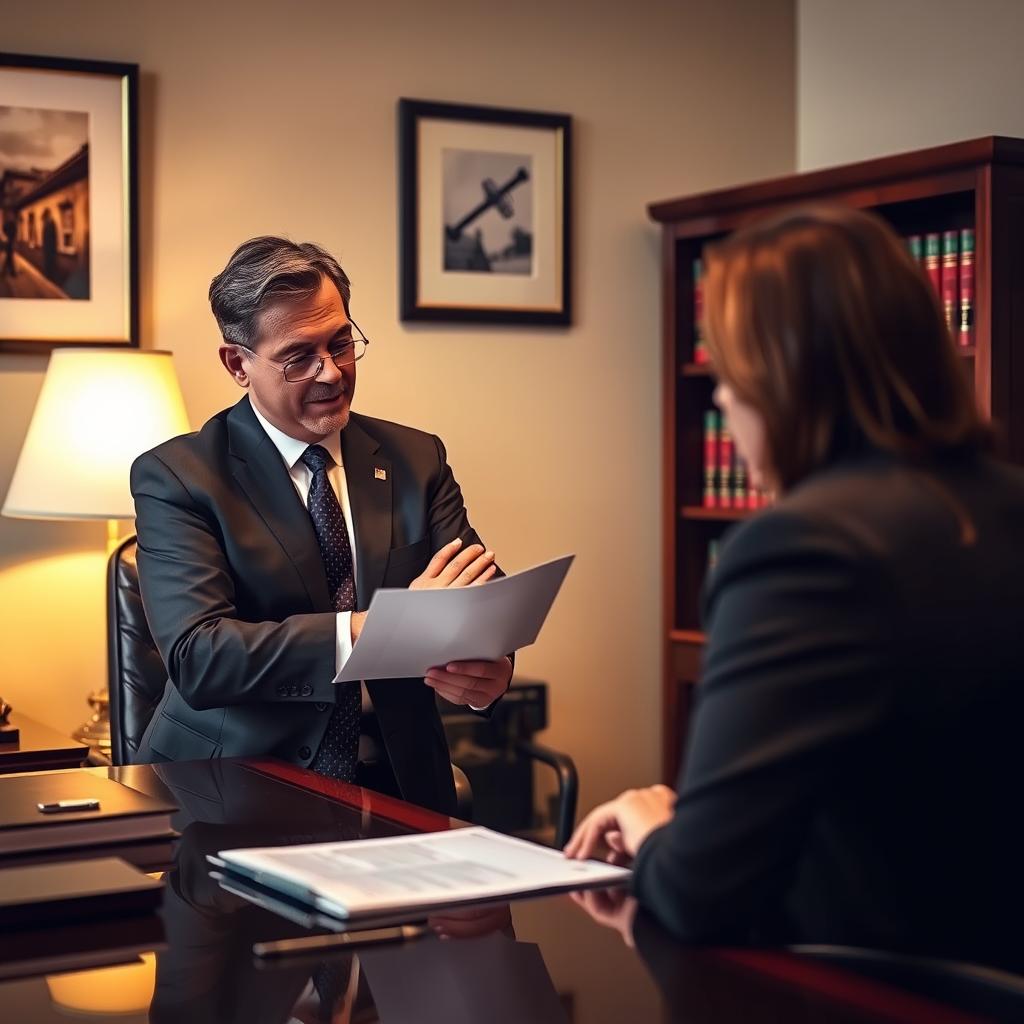
Fraud Defense Lawyer U Street Corridor, DC
A fraud charge in the U Street Corridor of Washington, D.C., brings a unique set of challenges. The United States Attorney’s Office for the District of Columbia—the federal prosecutor that handles all local criminal cases under D.C. Code Title 22—pursues fraud allegations with substantial resources, and the outcome can affect employment, professional licensing, immigration status, and personal freedom. Whether you are accused of credit card fraud, identity theft, forgery, wire fraud, or another white‑collar offense, the path through the D.C. Superior Court at 500 Indiana Avenue NW requires experienced, location‑focused representation. Law Offices Of SRIS, P.C., founded in 1997, serves clients in the U Street neighborhood and across the District. The firm’s Of Counsel attorneys are admitted to the D.C. Bar and appear regularly in Superior Court. To discuss your situation, reach Law Offices Of SRIS, P.C. at (888) 437-7747. Law Offices Of SRIS, P.C. – Advocacy Without Borders.
What Fraud Defense Means in U Street Corridor, DC
The U Street Corridor—stretching along U Street NW between 9th and 18th Streets and including the vibrant neighborhoods of Shaw and Logan Circle—sits near the center of the District’s judicial apparatus. Most local fraud prosecutions are heard at the D.C. Superior Court Criminal Division, a unified trial court that handles everything from misdemeanor petty theft to complex felony financial schemes. The court is located at 500 Indiana Avenue NW, steps from the Judiciary Square Metro station, and its dockets reflect the dense, diverse population of the capital.
Fraud defense in this jurisdiction differs from many other cities because of the prosecutorial structure. No county‑level District Attorney or Commonwealth’s Attorney handles the case. Instead, the United States Attorney’s Office for D.C. (USAO‑DC) assigns federal prosecutors who file charges under the District of Columbia Criminal Code. The Metropolitan Police Department investigates local offenses, and federal agencies such as the U.S. Postal Inspection Service or the Secret Service often join in larger fraud matters. Because D.C. Does not use traditional cash bail, a person charged with fraud is generally assessed by the Pretrial Services Agency, which makes a release recommendation based on risk factors, not a bond schedule. Fraud allegations that involve federal programs, financial institutions, or interstate communication can also lead to parallel federal charges in the U.S. District Court for the District of Columbia, located at the E. Barrett Prettyman Courthouse on Constitution Avenue. Understanding these layered procedures is essential to mounting an effective defense, and a legal team with familiarity in both Superior Court and the federal courthouse provides an advantage.
How Mr. Sris and the Firm’s Of Counsel Attorneys Handle Fraud Defense Cases
Every fraud case begins with a careful examination of the government’s evidence. Mr. Sris, a former prosecutor, understands how financial‑crime investigations are built, from the initial complaint to the grand jury presentation. The firm’s Of Counsel attorneys—each with extensive experience in D.C. Criminal defense—then work through the specific elements of the charged offense. For example, many fraud statutes require proof of intent to defraud, reliance by the victim, or a false representation of material fact. The defense may challenge the credibility of the alleged victim, scrutinize the authenticity of digital records, or demonstrate that a disputed transaction was a good‑faith business disagreement rather than a criminal scheme.
Once the defense strategy is developed, the firm’s attorneys engage with the prosecutor’s office and the court. Under D.C.’s unique structure, negotiations occur with Assistant U.S. Attorneys, who often have discretion to amend or dismiss charges before trial. The team explores every available option: pre‑indictment advocacy, a motion to suppress evidence obtained through an unlawful search, or a bench trial that leverages the strategic advantage of presenting factual defenses directly to the judge. Because D.C. Law allows record‑sealing for many offenses under D.C. Code § 16‑803, the attorneys advise clients on post‑resolution steps that may allow them to clear their record. Throughout the process, the firm’s focus is on protecting the client’s rights while working toward a resolution that minimizes long‑term consequences.
About Mr. Sris and the Firm’s Of Counsel Attorneys
Mr. Sris is Owner and Founder of Law Offices Of SRIS, P.C. Admitted in Virginia, Maryland, the District of Columbia, New Jersey, and New York, he has practiced criminal defense since founding the firm in 1997. As a former prosecutor, he brings insight into how the government evaluates fraud cases—from investigative techniques to charging decisions. Mr. Sris testified before the Virginia House Courts of Justice Committee in support of 2019 HB 635 (chief patron Del. David Bulova), reflecting a long‑standing commitment to the development of fair legal practice.
Mr. Sris and the firm’s Of Counsel attorneys bring extensive combined legal experience to every fraud defense matter. The team includes attorneys admitted to practice in all D.C. Courts, with backgrounds in high‑stakes litigation and scientific‑evidence challenges. Results may vary. The firm’s Arlington location, at 1655 Fort Myer Drive just across the Potomac River, serves clients in the U Street Corridor and throughout the District. By appointment only. Call (888) 437-7747 to schedule a consultation.
Frequently Asked Questions
Who prosecutes criminal fraud cases in Washington, D.C.?
Criminal cases in DC are prosecuted by the United States Attorney’s Office for DC, not a local district attorney. DC is a federal territory where local crimes under the D.C. Code are prosecuted by federal prosecutors. Fraud charges—whether local or federal in nature—may be heard in either D.C. Superior Court or U.S. District Court, depending on the specific offense. The Pretrial Services Agency, rather than a cash bail system, handles release decisions. This unique hybrid system means that a defense team must be prepared to navigate both local and federal procedural rules.
Does DC use cash bail for fraud charges?
No, DC does not have a traditional cash bail system for most offenses, including fraud. Instead, the Pretrial Services Agency (a federal agency) evaluates arrestees and makes a release recommendation to the court based on risk of flight and danger to the community. Most defendants are released without posting money. This system can speed pre‑trial release, but it also means that a skilled advocate must present a strong case for release at the earliest opportunity.
Can I get a fraud conviction sealed from my DC criminal record?
Yes, many fraud convictions and acquittals can be sealed under D.C. Code § 16‑803, subject to waiting periods and eligibility requirements. The DC record‑sealing law permits eligible individuals to petition the court to restrict public access to their criminal record. Acquittals and dismissals are generally eligible immediately, while certain misdemeanor and felony fraud convictions may be sealed after a waiting period. Record‑sealing can be critical for employment and housing. An attorney can evaluate your eligibility and guide you through the petition process at D.C. Superior Court.
What should I do if I am under investigation for fraud in the U Street area?
Do not speak to law enforcement without legal counsel present. Fraud investigations often begin quietly—with a detective’s phone call, a subpoena for financial records, or a search warrant. Anything you say to an investigator can be used against you, even if you believe you are only providing background information. Contact an experienced defense lawyer immediately. The firm’s attorneys can advise you on preserving evidence, managing communications, and preparing for any potential charges before an arrest occurs.
Do I need a lawyer for a fraud charge in U Street Corridor?
The complexity of D.C. Fraud prosecutions makes representation by a lawyer strongly advisable. Fraud statutes often hinge on subtle questions of intent, and the government’s case may rely on voluminous documentary evidence and expert testimony. An attorney can identify constitutional violations, negotiate with the U.S. Attorney’s Office, file pre‑trial motions, and, if necessary, take your case to trial. Without a lawyer, you risk missing deadlines and accepting unfavorable plea offers without a full understanding of the consequences.
How do I find a fraud defense attorney in U Street Corridor, DC?
Look for a defense team with specific experience in D.C. Superior Court and financial‑crime investigations. A firm with multi‑state practice can also assist if federal charges emerge. Law Offices Of SRIS, P.C. has served D.C. Clients since 1997, and the firm’s Of Counsel attorneys appear regularly in Superior Court. To request a consultation, call (888) 437-7747.
District‑wide resources for U Street Corridor residents:
Washington, D.C. Criminal Defense Overview |
Georgetown Criminal Defense |
Dupont Circle Criminal Defense |
Logan Circle Criminal Defense
Official information sources (open in new window):
D.C. Superior Court — Criminal Division
D.C. Code Title 22 (Criminal Offenses)
United States Attorney’s Office for the District of Columbia
Attorney advertising. Prior results do not guarantee a similar outcome. Case results depend on a variety of factors unique to each case. Results may vary.