
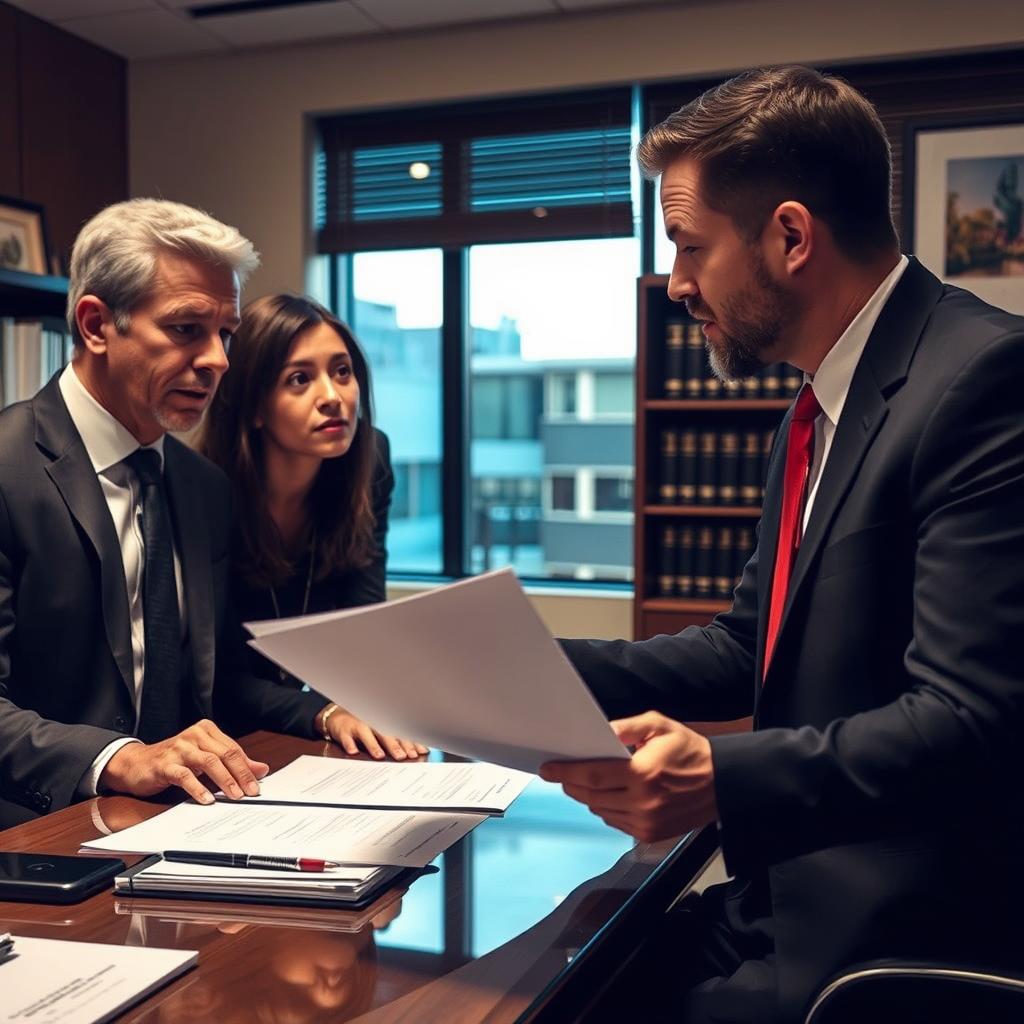
Shoplifting Lawyer American University Park, DC
When a shoplifting arrest occurs in American University Park, the charge can lead to serious repercussions. A conviction for retail theft under District of Columbia law may result in a criminal record, incarceration, and long-term collateral consequences that affect employment, housing, and immigration status. The criminal defense attorneys at Law Offices Of SRIS, P.C., founded in 1997 by former prosecutor Mr. Sris, represent individuals facing shoplifting and other theft allegations in D.C. Superior Court. The firm has served over 10,000 clients and earned more than 100 client reviews. All criminal cases in the District are prosecuted by the United States Attorney’s Office for the District of Columbia—not by a local district attorney—and the court operates a Pretrial Services Agency that assesses release conditions rather than relying on cash bail. These distinctive features of the D.C. Criminal justice system make experienced local counsel essential. To discuss your case with a criminal defense lawyer who appears regularly at D.C. Superior Court, call (888) 437-7747. Law Offices Of SRIS, P.C. – Advocacy Without Borders.
What Criminal Defense Means in American University Park
American University Park is a residential neighborhood in Northwest Washington, D.C., bounded by Tenleytown, Spring Valley, and Friendship Heights. Residents and visitors who are charged with a criminal offense in the area proceed through the D.C. Superior Court, located at 500 Indiana Avenue NW, at the Judiciary Square Metro station. The Criminal Division handles all local criminal matters, from misdemeanor shoplifting to serious felonies. Because the District of Columbia is a federal territory, the United States Attorney’s Office for D.C. Prosecutes local criminal cases—there is no county district attorney. This means that a person charged with shoplifting faces a prosecution team with federal resources, and the procedural rules and plea practices differ from those in neighboring Virginia and Maryland.
Shoplifting in D.C. Is prosecuted under the District’s general theft statutes. When the value of the merchandise is less than $1,000, the offense is charged as second-degree theft, a misdemeanor that carries a maximum sentence of 180 days’ incarceration and a fine. If the value of the property taken exceeds $1,000, the charge becomes first-degree theft, a felony punishable by up to 10 years in prison. Beyond the direct penalties, a theft conviction can create a permanent criminal record that affects professional licensing, educational opportunities, and security clearances. The Pretrial Services Agency, a federal agency, conducts risk assessments and makes release recommendations to the court; most defendants charged with non‑violent theft offenses are released on personal recognizance or under supervised conditions without having to post money bail.
How Mr. Sris and His Of Counsel Handle Criminal Defense Cases
When a client contacts Law Offices Of SRIS, P.C. about a shoplifting charge in American University Park, the first step is to understand the specific facts of the case and the client’s background. Mr. Sris and his Of Counsel team review the police report, any surveillance footage, and the evidence that the prosecution intends to use. They evaluate whether the arrest was supported by probable cause, whether statements were obtained in compliance with constitutional requirements, and whether the value of the merchandise can be challenged. In many shoplifting cases, the key question is whether the defendant actually intended to permanently deprive the store of the property—an element the government must prove beyond a reasonable doubt.
Once the evidence has been thoroughly assessed, the defense team communicates with the assigned Assistant United States Attorney to explore options. In appropriate cases, the firm may seek a diversion outcome, such as a deferred prosecution agreement or a dismissal after the completion of community service or a theft‑awareness program. If a negotiated resolution cannot be reached, Mr. Sris and his Of Counsel are prepared to litigate pretrial motions to suppress evidence, challenge witness identifications, and—when necessary—take the case to trial before a judge or jury at D.C. Superior Court. Throughout the process, the team explains each development to the client and works toward the most favorable resolution available under the circumstances.
About Mr. Sris and His Of Counsel Team
Mr. Sris, Owner and Founder of Law Offices Of SRIS, P.C., founded the firm in 1997 after serving as a prosecutor. His experience on the other side of the courtroom gives him insight into how the prosecution builds a shoplifting case and where weaknesses may exist. Mr. Sris testified before the Virginia House Courts of Justice Committee in support of 2019 HB 635 (chief patron Del. David Bulova). He is admitted to practice in Virginia, Maryland, the District of Columbia, New Jersey, and New York.
Working alongside Mr. Sris, the firm’s Of Counsel attorneys bring extensive combined legal experience to every criminal matter. The team includes lawyers with backgrounds in complex felony litigation and a deep familiarity with D.C. Superior Court procedures. Collectively, Mr. Sris and his Of Counsel have documented case results across multiple practice areas since 1997. Results may vary. All communications with the firm are confidential, and consultations are by appointment. To reach the firm, call (888) 437-7747.
Frequently Asked Questions
Who prosecutes criminal cases in Washington, D.C.?
Criminal cases in the District of Columbia, including shoplifting charges, are prosecuted by the United States Attorney’s Office for the District of Columbia (USAO‑DC), not by a local district attorney. The District of Columbia is a federal territory, and local crimes under the D.C. Code are handled by federal prosecutors. All cases are heard at D.C. Superior Court, located at 500 Indiana Avenue NW. The unique federal‑local hybrid system means that the prosecution’s resources and charging practices differ from those of neighboring states, making it important to have a lawyer who regularly appears in D.C. Courts.
Is shoplifting a misdemeanor or a felony in D.C.?
Shoplifting in the District of Columbia is charged as either a misdemeanor or a felony based on the value of the merchandise involved. If the property is valued at less than $1,000, the offense is second‑degree theft, a misdemeanor punishable by up to 180 days in jail and a fine. When the value is $1,000 or more, the charge becomes first‑degree theft, a felony that carries a potential sentence of up to 10 years’ imprisonment. The determination of value is often a contested issue, and an experienced defense lawyer can challenge the prosecution’s valuation evidence.
Does D.C. Have cash bail for shoplifting charges?
No, the District of Columbia does not use a traditional cash bail system. Instead, the D.C. Pretrial Services Agency (PSA), a federal agency, conducts a risk assessment and makes a release recommendation to the judge. Most individuals charged with non‑violent theft offenses are released on personal recognizance or with conditions such as check‑ins with a pretrial services officer. The court may impose supervised release if it determines the defendant poses a risk of danger or flight. An attorney can advocate for the least restrictive release conditions at the initial appearance.
Can I get a shoplifting charge dismissed or sealed?
Yes, a shoplifting charge in D.C. May be dismissed through a deferred prosecution agreement, and if the case ends without a conviction, you may be eligible to seal your record. The D.C. Code allows for record sealing under § 16‑803 for acquittals, dismissals, and qualifying convictions after a waiting period. An attorney can seek a deferred disposition or diversion program that, upon successful completion, results in a dismissal and opens the door to sealing. Even some older theft convictions may be sealed after the prescribed waiting period has elapsed.
What should I do if I am arrested for shoplifting in American University Park?
If you are arrested for shoplifting in American University Park, remain calm, exercise your right to remain silent, and request an attorney. You are not obligated to answer questions beyond providing basic identifying information. Any statements you make can be used against you. Contact a criminal defense lawyer as soon as possible so that counsel can advise you at your first appearance and begin working to secure a favorable release decision and a strong defense.
Do I need a lawyer for a shoplifting charge in D.C.?
You are not legally required to hire a lawyer, but having experienced counsel is critical because a shoplifting conviction carries long‑term consequences. An attorney can challenge the prosecution’s evidence, negotiate for a charge reduction or diversion, and advise you on the immigration and professional-licensing implications of a theft plea. Self‑representation exposes you to the full weight of the United States Attorney’s Office without the procedural knowledge and advocacy that counsel provides. For a confidential case evaluation, call (888) 437-7747.
Related criminal defense pages:
- Washington, D.C. Criminal Defense
- Georgetown Criminal Lawyer
- Spring Valley Criminal Lawyer
- Cleveland Park Criminal Lawyer
- Chevy Chase Criminal Lawyer
Official Resources:
D.C. Code Title 22 (Criminal Offenses and Penalties)
DC Superior Court
Attorney advertising. Prior results do not guarantee a similar outcome. Case results depend on a variety of factors unique to each case. Results may vary.