
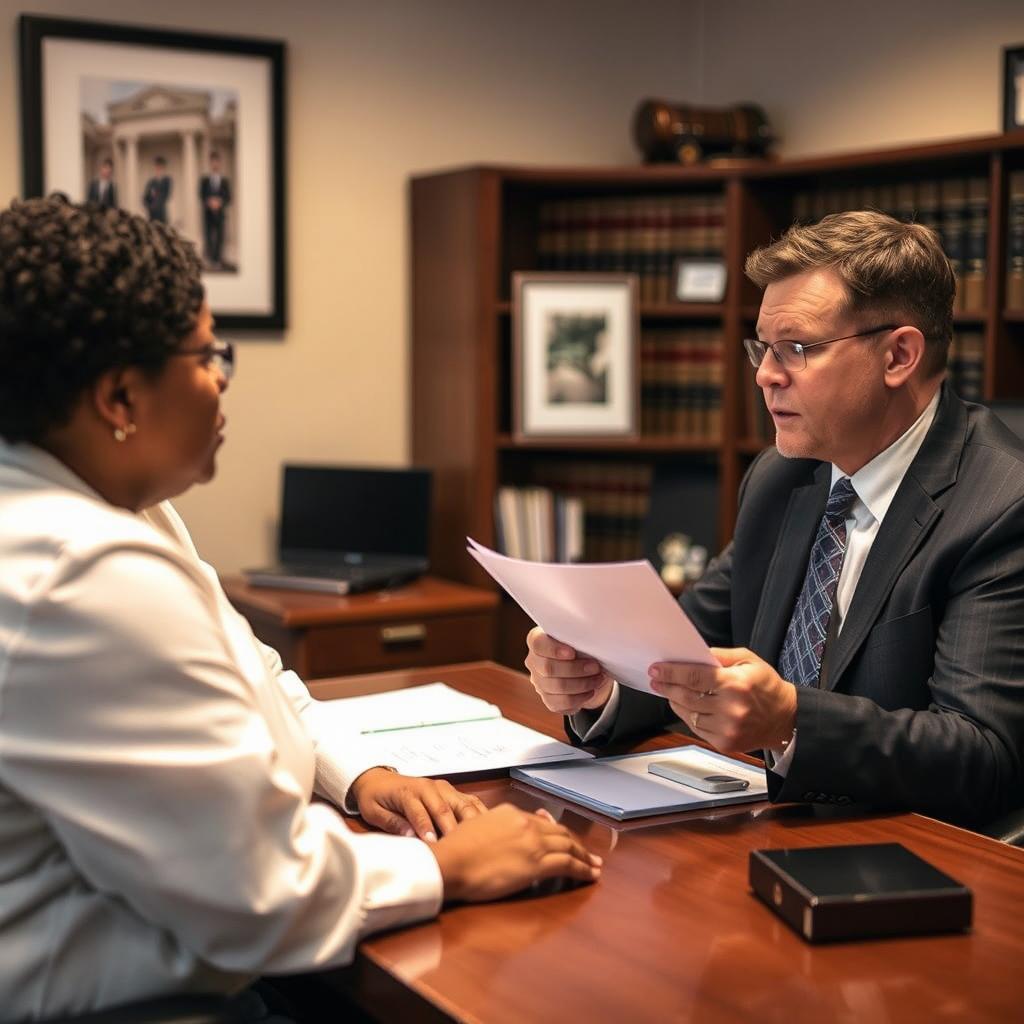
Shoplifting Lawyer Spring Valley, DC
If you or someone you care about has been accused of shoplifting in Spring Valley, DC, the charge demands that you contact us to request a consultation. Shoplifting in the District of Columbia is prosecuted as theft under D.C. Code Title 22, and even a first offense can lead to jail time, fines, and a criminal record that affects employment, professional licensing, and housing. The unique jurisdiction of Washington, D.C. Means that local criminal cases are not handled by a district attorney but by the United States Attorney’s Office for the District of Columbia—a federal prosecutorial agency. Cases are heard at D.C. Superior Court, located at 500 Indiana Avenue NW, near Judiciary Square Metro. Spring Valley residents, from American University Park to Wesley Heights, are served by the Arlington location of Law Offices Of SRIS, P.C., approximately three miles from the courthouse. Mr. Sris and his Of Counsel bring extensive combined legal experience to criminal matters in D.C. To discuss your shoplifting case with an experienced criminal defense team, reach our firm at (888) 437-7747. Law Offices Of SRIS, P.C. – Advocacy Without Borders.
What Shoplifting Means in Spring Valley, DC
Spring Valley, one of Washington, D.C.’s quiet residential neighborhoods, is bordered by Wesley Heights and American University Park. Even in a neighborhood known for tree-lined streets and stately homes, a shoplifting allegation can arise from a misunderstanding or a momentary lapse at a retailer on Wisconsin Avenue, MacArthur Boulevard, or nearby commercial corridors. Understanding how the District of Columbia treats shoplifting—and how its criminal justice system differs from surrounding states—is essential to protecting your future.
In the District, shoplifting falls under the umbrella of theft offenses, prosecuted under D.C. Code Title 22. The severity of the charge depends primarily on the value of the property taken. If the value is under $1,000, the offense is usually charged as theft in the second degree, a misdemeanor punishable by up to 180 days in jail and a fine of up to $1,000. If the value is $1,000 or more, the charge may be elevated to theft in the first degree, a felony carrying up to 10 years of imprisonment. These statutory ranges are set by the D.C. Code, and the specific charge in any case will be determined by the value of the merchandise and the facts of the arrest.
One of the most significant legal features of D.C. Criminal practice is that the District does not use a cash bail system for most offenses. Instead, the Pretrial Services Agency—a federal agency—assesses each defendant and recommends release conditions to the court. Many individuals arrested on shoplifting charges are released without posting money, but the release conditions can include check-ins, drug testing, or stay-away orders from stores. Mr. Sris and his Of Counsel team understand how the PSA’s assessment process works and can advocate for the least restrictive terms from the start. Cases are prosecuted at the D.C. Superior Court Criminal Division, where the United States Attorney’s Office brings charges under the local D.C. Code. This federal/local hybrid structure means that the government has considerable resources, making the guidance of a defense lawyer who regularly practices in the courthouse at 500 Indiana Avenue NW particularly valuable.
How Mr. Sris and His Of Counsel Handle Shoplifting Cases
When you contact Law Offices Of SRIS, P.C., the firm begins by gathering the full picture—police reports, store surveillance footage, witness statements, and any prior criminal history. Mr. Sris and his Of Counsel examine whether the store’s loss-prevention personnel followed applicable security-industry standards, whether the initial detention was lawful, and whether any statements were obtained in violation of constitutional protections. In D.C., where the prosecution is handled by the U.S. Attorney’s Office, the government may be open to negotiated resolutions that avoid a permanent criminal record, particularly for first-time offenses or cases where the value of the merchandise is low.
The firm works proactively to identify diversionary and deferred-disposition options. The District of Columbia offers certain first-offender programs and deferred sentencing arrangements that allow a charge to be dismissed upon completion of community service or other conditions. Mr. Sris and his Of Counsel also explore whether the case qualifies for a civil compromise—a mechanism available in some D.C. Shoplifting cases where the merchant agrees to accept restitution in exchange for the charge being dropped. Every strategy is built around the goal of minimizing the impact on your record, your employment, and your standing in the community. Throughout the process, the firm works to keep you informed about court dates, the status of any negotiations, and what to expect at each appearance before a judge at D.C. Superior Court.
About Mr. Sris and His Of Counsel Team
Mr. Sris, Owner and Founder of Law Offices Of SRIS, P.C., established the firm in 1997 and is admitted to practice in Virginia, Maryland, the District of Columbia, New Jersey, and New York. A former prosecutor, he brings firsthand insight into how the government builds its cases, knowledge that directly informs the defense strategies he develops for clients facing shoplifting and other theft charges. Mr. Sris testified before the Virginia House Courts of Justice Committee in support of 2019 HB 635 (chief patron Del. David Bulova).
Alongside Mr. Sris, his Of Counsel team collectively brings extensive combined legal experience to criminal defense matters across all firm practice areas. The team includes attorneys admitted in multiple jurisdictions and with deep familiarity with D.C. Superior Court procedures. Mr. Sris and his Of Counsel have documented case results since the firm’s founding. Results may vary. The firm serves Spring Valley, DC, and the surrounding neighborhoods from its Arlington location at 1655 Fort Myer Drive, Suite 700, Room 719, Arlington, Virginia. In-person consultations are by appointment; phones are answered during business hours at (888) 437-7747.
Frequently Asked Questions
Is shoplifting a misdemeanor or a felony in Washington, D.C.?
Shoplifting in D.C. Is charged as theft, and it can be either a misdemeanor or a felony depending on the value of the property taken. If the alleged value is less than $1,000, the offense is typically prosecuted as theft in the second degree, a misdemeanor carrying up to 180 days in jail. If the value is $1,000 or more, the charge may be elevated to theft in the first degree, a felony punishable by up to 10 years of imprisonment. The classification also affects the collateral consequences of a conviction, including eligibility for record sealing and the impact on professional licenses. A shoplifting lawyer can assess the exact value alleged by the government and challenge it where appropriate.
Who prosecutes shoplifting cases in Washington, D.C.?
Criminal cases in D.C., including shoplifting, are prosecuted by the United States Attorney’s Office for the District of Columbia (USAO-DC), not a local district attorney. Because the District of Columbia is a federal territory, local crimes under the D.C. Code are handled by federal prosecutors working in the Superior Court of the District of Columbia. This unique arrangement means the government has significant investigatory and legal resources. Cases are heard at D.C. Superior Court, 500 Indiana Avenue NW. Mr. Sris and his Of Counsel team are experienced in appearing before the judges of that courthouse and negotiating with the USAO-DC in theft matters. To discuss your specific shoplifting charge, reach our firm at (888) 437-7747.
Does D.C. Use cash bail for shoplifting cases?
No, D.C. Does not use a traditional cash bail system; the Pretrial Services Agency assesses risk and recommends release conditions instead. When a person is arrested for shoplifting, PSA—a federal agency—conducts interviews and background checks, then makes a release recommendation to the court. Most defendants charged with theft are released on personal recognizance or with non-monetary conditions such as periodic check-ins or stay-away orders from the store involved. This approach means that securing a prompt and informed presentation at the initial court appearance can significantly influence the conditions of release. An attorney familiar with PSA procedures can help ensure that your side of the story is properly communicated to the court.
Can I get my D.C. Shoplifting record sealed?
Yes, D.C. Law allows record sealing under D.C. Code § 16-803 for acquittals, dismissals, and certain qualifying convictions after a waiting period. If your shoplifting charge was dismissed, you may be eligible to petition for sealing immediately. For convictions, the waiting period depends on the classification of the offense; misdemeanor convictions typically have a shorter waiting period than felonies. Sealing can significantly limit who can access your criminal record, potentially opening doors for employment and housing. Because the eligibility rules are fact-specific, it is wise to have an attorney review your criminal history and advise on the petition process at D.C. Superior Court. For guidance on your specific situation, contact Law Offices Of SRIS, P.C. at (888) 437-7747.
What should I do if I am accused of shoplifting in Spring Valley?
If you are facing a shoplifting accusation in Spring Valley, DC, the most important step is to contact a criminal defense lawyer immediately and refrain from discussing the incident with anyone else. Do not speak with store security, loss-prevention personnel, or the police about what happened; anything you say can be used against you. Politely decline to make a statement and ask to speak with an attorney. Preserve any evidence you may have, such as receipts, photos, or witness contact information, but do not attempt to contact the store or the alleged victim on your own. A prompt call to Law Offices Of SRIS, P.C. Allows the firm to begin protecting your rights at the earliest stage of the case. Call (888) 437-7747 to schedule a consultation.
How does a shoplifting case move through D.C. Superior Court?
A shoplifting case in D.C. Typically starts with an arraignment at the Superior Court Criminal Division, where the defendant is formally charged and enters a plea, followed by pretrial hearings and possibly a trial. After arrest and processing, the initial appearance before a judge may occur within a day or two. The judge reviews the Pretrial Services Agency report and sets release conditions. If a plea is not entered, the case proceeds through status hearings where the defense and the U.S. Attorney’s Office may exchange evidence and discuss potential resolutions. Many shoplifting cases are resolved through negotiation—such as diversion, dismissal upon completion of community service, or a plea to a reduced charge—rather than trial. If no agreement is reached, the case goes to trial before a judge or jury. Having an attorney who knows the courtroom and the prosecutors at 500 Indiana Avenue NW can make a meaningful difference at each step of the process.