
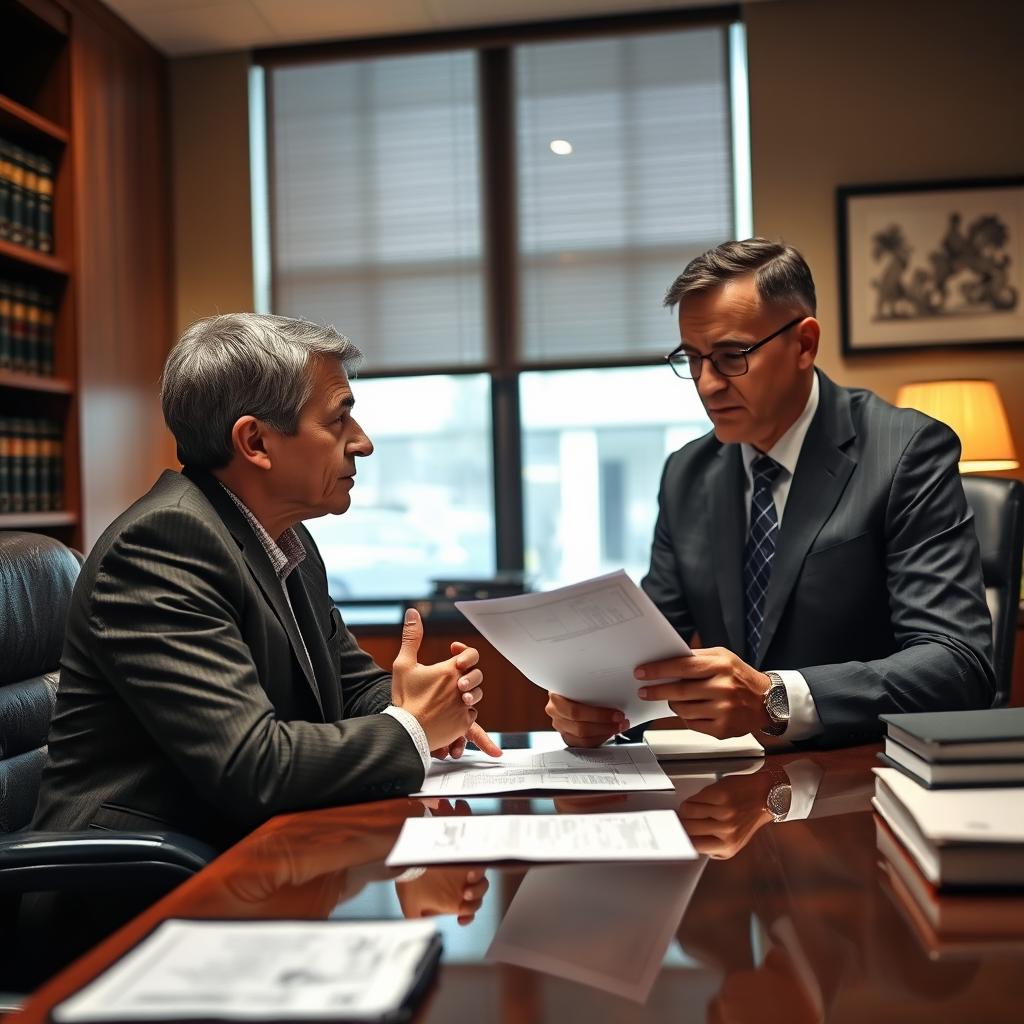
Terrorism Defense Lawyer Maryland, MD
If you or someone close to you is facing a terrorism-related investigation or charge in Maryland, the weight of the criminal justice system can feel overwhelming. Terrorism allegations involve a convergence of state and federal law, advanced investigative techniques, and severe potential consequences that can affect your liberty, reputation, and future for years to come. At Law Offices Of SRIS, P.C., Mr.Sris and his Of Counsel team provide experienced, multi-state defense representation to individuals in Maryland who need clear, strategic guidance through this high-stakes process. With a practice grounded in more than 25 years of experience and a thorough understanding of both Maryland anti-terrorism law and the federal statutes that frequently govern these cases, we work to protect your rights from the first contact with law enforcement through trial, if necessary. To discuss your situation and learn how we may be able to help, call (888) 437‑7747. Law Offices Of SRIS, P.C. – Advocacy Without Borders.
What Terrorism Defense Means in Maryland
Terrorism defense in Maryland sits at the intersection of state and federal criminal enforcement. On the state side, Maryland prohibits acts of terrorism and related offenses under the Criminal Law Article, Title 9, which defines a terrorist act as a violent felony, arson, or use of a destructive device committed with the intent to intimidate or coerce a civilian population, influence government policy through intimidation or coercion, or affect the conduct of government by mass destruction, assassination, or kidnapping. State-level charges may be filed in a Maryland circuit court, while federal terrorism charges—brought under 18 U.S.C. §§ 2331‑2339D and other provisions—are prosecuted in the U.S.District Court for the District of Maryland, typically in the Greenbelt or Baltimore divisions. Because federal authorities frequently lead terrorism investigations, a single investigation can produce parallel or consecutive proceedings in both court systems. Understanding how these overlapping jurisdictions interact is essential to building a defense that accounts for the long‑term consequences in each forum.
Maryland’s geography and federal presence—from the Port of Baltimore and BWI Airport to the many federal agencies headquartered in and around the state—mean that alleged terrorism activity here can attract attention from the FBI, Homeland Security Investigations, the ATF, and other federal task forces. The investigative toolbox available to these agencies is extensive: electronic surveillance, undercover operations, financial forensics, and international evidence gathering through Mutual Legal Assistance Treaties. A person under investigation may not know the full scope of the government’s case until well after an indictment. Defense counsel who regularly handle terrorism matters in this region understand how to challenge the admissibility of such evidence, assess the strength of the government’s case early, and work to preserve the client’s procedural rights at every stage. All of this unfolds in a procedural environment that often diverges from typical criminal litigation—sealed filings, protective orders for classified or security-sensitive material, and pretrial detention motions under the Bail Reform Act are common. For anyone caught in this system, retaining a defense team that is comfortable with both the substantive law and the unique procedural terrain is a critical first step.
How Mr. Sris and His Of Counsel Handle Terrorism Defense Cases
When Law Offices Of SRIS, P.C. Undertakes a terrorism defense matter in Maryland, the approach begins with a rigorous review of the allegations and the evidence the government intends to use. Mr.Sris and his Of Counsel team scrutinize the investigative record for legal and procedural weaknesses—whether in the way a search warrant was obtained, the manner in which electronic surveillance was conducted, or the reliability of cooperating witnesses. In terrorism cases, the government often relies on circumstantial evidence, statements made in charged political or religious contexts, and connections to groups or individuals that may not, standing alone, prove criminal intent. Our attorneys work to separate inflammatory allegations from provable facts and to ensure that constitutional protections against unreasonable searches, coercive interrogations, and overly broad surveillance are enforced.
The timeline of a terrorism case in Maryland is shaped by the court’s calendar, the volume of discovery, and the complexity of the charges. Mr.Sris and his Of Counsel work with forensic accountants, linguists, former intelligence analysts, and other professionals to evaluate the government’s narrative and develop a defense strategy tailored to the specific facts. In appropriate cases, we engage in early discussions with prosecutors or federal agents to seek the narrowing of charges, a bail package that allows release pending trial, or a resolution that avoids the catastrophic sentencing exposure a jury trial can bring. Where the government’s case appears overreaching or founded on a misinterpretation of the evidence, we are prepared to litigate pretrial motions, challenge the admissibility of key prosecution evidence, and present a full defense at trial. Every decision—whether to negotiate, to move to suppress, or to go to verdict—is made in close consultation with the client after a clear explanation of the options and the realistic possibilities they carry.
About Mr. Sris and His Of Counsel Team
Mr. Sris, Owner and Founder of Law Offices Of SRIS, P.C., began his legal career as a prosecutor, an experience that gives him a firsthand understanding of how the government constructs serious felony cases. Since founding the firm in 1997, he has concentrated his practice on criminal defense, including terrorism and other complex federal matters, and has built a team of Of Counsel attorneys who bring extensive combined legal experience to every matter. Mr. Sris testified before the Virginia House Courts of Justice Committee in support of 2019 HB 635 (chief patron Del. David Bulova), and he is admitted to practice in Virginia, Maryland, the District of Columbia, New Jersey, and New York. His Of Counsel colleagues contribute advanced litigation skills and deep subject-matter backgrounds that strengthen the firm’s ability to handle multi‑defendant, multi‑jurisdiction prosecutions.
Every terrorism defense matter the firm accepts receives the focused attention of Mr. Sris and his Of Counsel. Our team is supported by access to investigators, forensic experts, and other consulting professionals whose insights often prove decisive in unraveling the government’s case. Mr. Sris and his Of Counsel bring extensive combined legal experience—Results may vary.—and they remain committed to providing each client with a thorough, disciplined defense that accounts for both the immediate legal jeopardy and the long‑term consequences of a terrorism conviction. To discuss your circumstances with a member of our team, call (888) 437‑7747.
Frequently Asked Questions
What is the difference between state and federal terrorism charges in Maryland?
Maryland state terrorism charges are brought under the Criminal Law Article, while federal terrorism charges are prosecuted under statutes such as 18 U.S.C. § 2331‑2339D. Federal charges often carry more severe sentencing exposure, mandatory minimum terms, and the absence of parole, and they are investigated by agencies like the FBI or HSI with broad resources. State charges may be filed for acts of violence or destruction intended to intimidate a civilian population or influence government policy. Because both sovereigns can pursue separate cases for the same conduct, a person accused of terrorism-related activity may face simultaneous proceedings in the Maryland state courts and the U.S.District Court for the District of Maryland. Understanding the interplay between state and federal law is a central part of the defense strategy.
Do I need a lawyer if I am only under investigation and not charged?
Yes, retaining an experienced terrorism defense lawyer at the investigative stage can materially affect the direction of the case. FBI or state law enforcement contact—whether through an interview request, a grand jury subpoena, or the execution of a search warrant—signals that the government is building a case and that your statements and actions will be scrutinized. An attorney can communicate with investigators on your behalf, advise you on your Fifth Amendment rights, and work to prevent you from inadvertently providing information that could be used to justify charges or additional investigative steps. Early legal guidance is particularly important in terrorism investigations because the government’s evidence-gathering methods are often extensive and may operate for months before any public filing occurs. Contact our firm at (888) 437‑7747 to discuss your situation.
What are the potential penalties for a terrorism conviction in Maryland?
Penalties for a terrorism conviction depend on whether the case proceeds under state or federal law, the specific charges, and any applicable sentencing enhancements. Maryland law classifies terrorist acts as felonies, with sentences that can include decades of incarceration. Federal terrorism offenses, including providing material support to a designated foreign terrorist organization or the use of weapons of mass destruction, can carry mandatory minimum sentences and, in the most serious cases, life imprisonment. Federal sentencing guidelines also apply, and there is no parole in the federal system. Because the range of possible outcomes is exceptionally broad, an effective defense focuses on challenging the charges, negotiating for reduced counts where possible, and presenting mitigating evidence that may influence the sentence imposed by the court.
How does a lawyer challenge the government’s evidence in a terrorism case?
A defense lawyer can challenge the government’s evidence by filing pretrial motions that test the legality of the investigation and the reliability of the proof. In terrorism cases, common challenges include motions to suppress evidence obtained through warrantless surveillance, whether electronic or physical; motions to exclude statements made without proper Miranda warnings or under coercive conditions; and Daubert or Frye challenges to the admissibility of expert testimony that the government intends to introduce. Additionally, defense counsel may obtain independent forensic analysis of digital devices, financial records, or other documentation to contest the government’s interpretation. Because terrorism cases often involve classified or protected information, defense attorneys may also need to navigate the Classified Information Procedures Act (CIPA) to obtain access to evidence the government seeks to withhold. Every challenge is tailored to the specific facts of the case and the procedures of the court in which the charges are filed.
Can a terrorism charge be reduced or dismissed?
Yes, under certain circumstances, terrorism charges can be reduced to lesser offenses or dismissed entirely. Reduction or dismissal may occur when the government’s evidence is legally inadmissible, when a key witness becomes unavailable or unreliable, or when the prosecution determines that the original charging decision over‑valued the available proof. An attorney can present the prosecution with legal and factual arguments that demonstrate weaknesses in the case, potentially experienced to a negotiated resolution short of trial. In some matters, pretrial litigation results in the dismissal of the most serious counts, leaving the defense to address lesser state charges that carry significantly reduced sentencing exposure. Every case is fact-specific, but a rigorous, early review of the evidence is essential to identifying these opportunities.
What should I do if law enforcement contacts me about a terrorism-related matter?
Politely decline to answer questions and state clearly that you want to speak with an attorney. Do not consent to any search of your person, vehicle, or home, and do not provide access to electronic devices without legal advice. Even casual conversation with agents can be used against you later, and the right to remain silent is most effective when exercised immediately. After asserting your rights, contact a qualified defense attorney who can take over communications with law enforcement. Terrorism investigations are often lengthy and multifaceted; early missteps can be difficult to correct later. For guidance, reach Law Offices Of SRIS, P.C. at (888) 437‑7747.
Montgomery County Criminal Defense Lawyer |
Prince George’s County Criminal Defense Lawyer |
Howard County Criminal Defense Lawyer |
Anne Arundel County Criminal Defense Lawyer |
Frederick County Criminal Defense Lawyer
Attorney advertising. Prior results do not guarantee a similar outcome.
Results may vary.
Case results depend on a variety of factors unique to each case.