
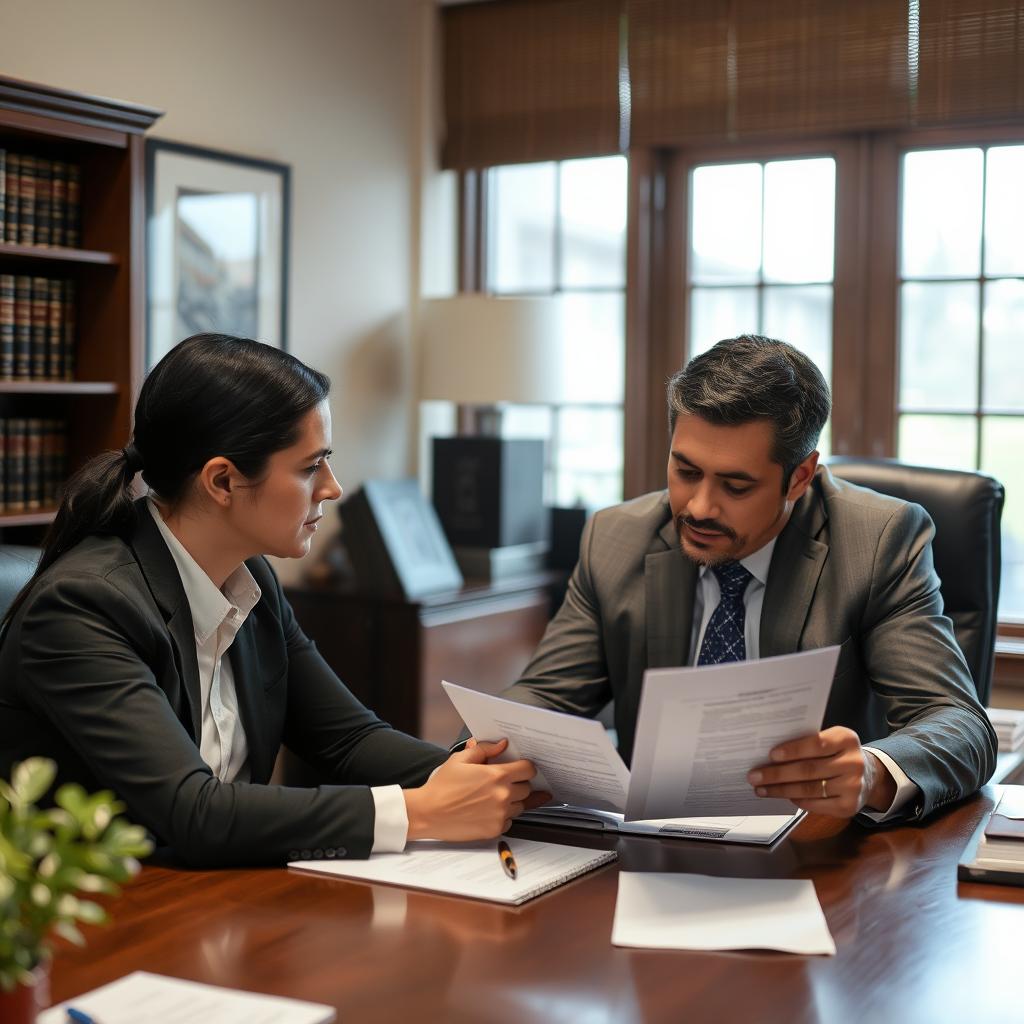
Theft Lawyer Forest Hills, DC
You were picking up a few items at a small shop along Connecticut Avenue in Forest Hills when a store manager stopped you and accused you of taking something without paying. Security called the police. A few hours later, you were released with a citation to appear at the DC Superior Court — Criminal Division. A theft allegation in the District of Columbia is not handled by a local district attorney’s office; it is prosecuted by the United States Attorney’s Office for the District of Columbia. The process moves differently here than in neighboring Virginia or Maryland, and the consequences of a conviction can affect your employment, your background check, and your immigration status. If you or someone you know is facing a theft charge in Forest Hills, DC, reach Law Offices Of SRIS, P.C. at (888) 437-7747 to request a consultation. Law Offices Of SRIS, P.C. – Advocacy Without Borders.
What Theft Means in Forest Hills, DC
Forest Hills is a residential neighborhood in Northwest Washington, DC, bordered by Van Ness, Chevy Chase, and Rock Creek Park. Any theft case that originates in Forest Hills — whether a shoplifting accusation, an allegation of stealing from a vehicle, or an incident involving a delivery package — is filed and resolved at the DC Superior Court at 500 Indiana Avenue NW, Washington, DC 20001. The court sits just steps from the Judiciary Square Metro station and handles all local criminal matters.
Theft in the District of Columbia is governed by D.C. Code Title 22. Because DC is a federal district rather than a state, the United States Attorney’s Office for the District of Columbia (USAO-DC) prosecutes local criminal offenses, including theft. There is no elected district attorney. This unique structure means that the prosecutor assigned to your case is a federal prosecutor, and the discovery and plea negotiation process follows federal prosecutorial practices. The DC Pretrial Services Agency — also a federal agency — assesses release conditions; DC does not operate a traditional cash-bail system for most offenses.
The possible consequences of a theft conviction depend on the value of the property involved and on the defendant’s prior record. Under D.C. Law, theft of property or services valued at $1,000 or more is classified as theft in the first degree and carries a potential penalty of up to ten years of incarceration. Theft of property or services valued at less than $1,000 is theft in the second degree, punishable by up to 180 days of incarceration and a fine of up to $1,000. A conviction may also result in a permanent criminal record unless it is later sealed under D.C. Code § 16‑803. The firm has represented clients in theft matters at DC Superior Court and works to protect our clients’ records, liberty, and future opportunities. Results may vary.
How Mr. Sris and His Of Counsel Handle Theft Cases
When a client contacts Law Offices Of SRIS, P.C. about a theft charge in Forest Hills, the firm’s first step is to review the charging document, the police report, and any available witness statements or surveillance footage. Mr. Sris and his Of Counsel team then evaluate whether the government can prove each element of the alleged offense — including identity, the value of the property, and the intent to permanently deprive the owner. Many theft cases turn on nuanced factual disputes: Was the item actually taken? Was the removal accidental? Did the person intend to pay or return the item? The firm’s approach is to identify every factual and legal weakness in the government’s case.
Because the USAO-DC prosecutes DC theft cases, the firm’s criminal practice includes regular appearances before the judges of the DC Superior Court Criminal Division. Mr. Sris and his Of Counsel communicate with the assigned Assistant United States Attorney and, where appropriate, explore alternatives such as diversion programs or deferred-sentencing agreements that can lead to a dismissal. If the case is not resolved before trial, the firm prepares a thorough defense for every phase of the proceeding — from arraignment and pretrial motions through trial and, if necessary, sentencing. The timeline of a theft case varies depending on the court’s calendar, the complexity of the evidence, and whether the defendant elects to waive certain procedural steps. The firm works to resolve matters efficiently while protecting the client’s rights at every stage.
About Mr. Sris and His Of Counsel Team
Mr. Sris, Owner and Founder of Law Offices Of SRIS, P.C., founded the firm in 1997. A former prosecutor, Mr. Sris brings insight into how the government builds its case at DC Superior Court and in other jurisdictions. Mr. Sris testified before the Virginia House Courts of Justice Committee in support of 2019 HB 635 (chief patron Del. David Bulova). He is admitted in Virginia, Maryland, the District of Columbia, New Jersey, and New York.
Mr. Sris and his Of Counsel bring extensive combined legal experience to criminal defense matters. Results may vary. The Of Counsel team includes attorneys with decades of trial experience in DC and Virginia courts, as well as attorneys who have handled complex felony matters and previously held death-penalty certification in Virginia before its abolition. The firm serves clients from its Arlington location — a short drive from Forest Hills — and can meet with clients in person by appointment or conduct telephone consultations 24 hours a day. Se habla español.
Frequently Asked Questions
What should I do if I’m arrested for theft in Forest Hills, DC?
If you are arrested for theft in Forest Hills, DC, remain calm, do not make any statements to law enforcement, and ask to speak with an attorney before answering any questions. The police may ask you to provide your name and identification, but you are not required to discuss the facts of the allegation. Once you are processed and released, or once you receive a citation, you should contact a criminal defense lawyer who appears regularly at DC Superior Court. Prompt legal guidance can help you understand the charges, the possible consequences, and the steps to protect your record.
Who prosecutes theft cases in Washington, D.C.?
Theft cases in Washington, D.C. Are prosecuted by the United States Attorney’s Office for the District of Columbia (USAO-DC), not by a local district attorney. DC is a federal district, and all local criminal offenses — including theft — are prosecuted by federal prosecutors assigned to DC Superior Court. This prosecution structure means that discovery procedures and plea discussions are governed by federal practice. The firm’s attorneys are experienced in working with the USAO‑DC and understand how to navigate that office’s charging and negotiation processes.
What are the potential penalties for a theft conviction in DC?
The penalty for a theft conviction in the District of Columbia depends on the value of the property or services taken. Theft in the first degree — involving property or services valued at $1,000 or more — is a felony carrying a possible sentence of up to ten years of incarceration. Theft in the second degree — involving property or services valued at less than $1,000 — is a misdemeanor punishable by up to 180 days of incarceration and a fine of up to $1,000. In addition to incarceration and fines, a conviction may result in a permanent criminal record, although record sealing may later be available under certain conditions.
Do I need a lawyer for a minor theft charge in DC?
Even a misdemeanor theft charge in DC can carry jail time and leave a permanent criminal record, so consulting an experienced criminal defense attorney is strongly recommended. Many people believe that a “small” theft case will simply result in a fine, but the United States Attorney’s Office can seek active jail time, probation, or community service. An attorney can evaluate whether the government can prove its case, negotiate for a reduced charge or diversion, and advise on the immigration consequences a theft conviction may trigger for non‑citizens.
How does a theft case move through DC Superior Court?
A theft case in DC typically begins with an arraignment at DC Superior Court, where the defendant is informed of the charges and enters a plea; the case then proceeds through pretrial status hearings, possible motions, and, if not resolved, a trial. The DC Pretrial Services Agency interviews the defendant before the arraignment and makes a release recommendation to the court. During the pretrial phase, the prosecutor must disclose evidence, and the defense may file motions to suppress evidence or dismiss the case. Many theft cases resolve before trial through negotiation, but if a trial is necessary, the case is heard by a judge or a jury in the Criminal Division.
Can a theft charge be dismissed in DC?
A theft charge in DC may be dismissed if the prosecution cannot prove its case beyond a reasonable doubt, if the defendant completes a diversion program, or if a pretrial motion to suppress evidence is granted. Dismissal is never past results do not guarantee a similar outcome; it depends on the specific facts, the strength of the evidence, and the discretion of the United States Attorney’s Office. An attorney can assess whether a motion to dismiss is viable and whether the client may be eligible for a deferred‑prosecution or first‑offender diversion program that, upon successful completion, can lead to the charge being dropped and the record eventually sealed.
Nearby Criminal Defense Resources
- Criminal Lawyer Washington, D.C.
- Criminal Lawyer Georgetown, DC
- Criminal Lawyer Spring Valley, DC
- Criminal Lawyer Cleveland Park, DC
- Criminal Lawyer Chevy Chase, DC
Additional Information
For official legal references, consult the District of Columbia Official Code — Title 22 (Criminal Offenses). Court information, including hours and case-access resources, is available at the DC Superior Court website.
Contact Law Offices Of SRIS, P.C. at (888) 437-7747 to request a consultation about a theft matter in Forest Hills, DC, or any of the surrounding neighborhoods. Phones are answered 24 hours a day, seven days a week.
Attorney advertising. Prior results do not guarantee a similar outcome.
Results may vary.
Case results depend on a variety of factors unique to each case.